 Lesser Black-backed Gull (graellsii & intermedius)
(last update:
lbbg 1cy May
lbbg 1cy June
lbbg 1cy July
lbbg 1cy August
lbbg 1cy September
lbbg 1cy October
lbbg 1cy November
lbbg 1cy December
lbbg 2cy January
lbbg 2cy February
lbbg 2cy Mar-April
lbbg 2cy May
lbbg 2cy June
lbbg 2cy July
lbbg 2cy August
lbbg 2cy September
lbbg 2cy October
lbbg 2cy Nov - Dec
lbbg 3cy Jan-April
lbbg 3cy May
lbbg 3cy June
lbbg 3cy July
lbbg 3cy August
lbbg 3cy September
lbbg 3cy October
lbbg 3cy Nov - Dec
lbbg sub-ad Jan-April
lbbg sub-ad May
lbbg sub-ad June
lbbg sub-ad July
lbbg sub-ad Aug
lbbg sub-ad Sept
lbbg sub-ad Oct
lbbg sub-ad Nov
lbbg sub-ad Dec
lbbg adult January
lbbg adult February
lbbg adult March
lbbg adult April
lbbg adult May
lbbg adult June
lbbg adult July
lbbg adult August
lbbg adult September
lbbg adult October
lbbg adult Nov - Dec
adult: November - December
Barth's research: validity of race intermedius?
From the 40's to the 70's, as one of the first persons, the Norwegian ornithologist Edvard Barth questioned the validity of subspecies intermedius, the main form of Lesser Black-backed Gull occurring in Norway. This text is a summary of the article by E. K. Barth and some extra notes about the current situation. Remember that nominate fuscus was more widespread in these days.
In the last decades, much has changed in the distribution of West-European Lesser Black-backed Gulls. Nowadays, they are breeding in large numbers in Britain, Norway and the Netherlands. The breeding range has expanded south along the Atlantic coast to France and the Iberia peninsular. Year 2000 LBBG's can be found from Iberia all the way along the coast north to the White Sea, in the U.K., the Faeroes and on Iceland. Small populations can be found in the NW of the United States.
In France the sub-species graellsii breed side by side in mixed colonies of michahellis (P. Yésou), it is sympatric with michahellis, and mixed breeding occurs only in very low numbers (which can be regarded typical in the contact zones of expanding species).
The same can be said about nominate fuscus, which breeds parapatric with heuglini. (They live in different, but neighbouring geographical conditions, without hybridization along the contact zone).
The group of Lesser Black-backed Gulls is variable in upper-part coloration, measurements and behaviour, varying from the larger graellsii to the smaller fuscus. Intermedius is, as the name suggests intermediate. Fuscus is small, has blackish upper-parts, migrates to the south-east and many individuals show a step-wise moult (Staffel mauser, after Stresemann & Stresemann). The colour of the upper-parts of the larger western representative graellsii is mid-grey and these birds migrate south, along the Atlantic coast. The variation in intermedius varies clinally. Most of the general idea was constructed by the extensive research by the Norwegian ornithologist E. K. Barth, published as Contribution No. 86, Zoological Museum, University of Oslo, called: The circumpolar systematics of Larus argentatus and Larus fuscus with special reference to the Norwegian populations.
Research in the 40's, 50's, 60's and 70's: Edvard K. Barth
Barth, as a Norwegian ornithologist, was much interested in the variation of Larus argentatus and Larus fuscus in Scandinavia, where both species show large intra-specific (sub-population) variation and he collected material from 1942 to 1966, altogether 690 birds. All birds were adults, collected during the breeding season. Based on this material and skins examined in other parts of NW Europe, Barth examined and analyzed the material on morphological criteria: mantle colour and chroma notation (in Munsell value, measured mechanically with reflectometer equipment), colour of soft parts (in Munsell value), measurements of body-parts (in mm) and egg-dimensions (in mm). Additional information was collected about geographical distribution and migration pattern.
Barth's classification: the third sub-species intermedius
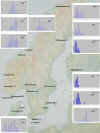 Map with clustered column charts for Scandinavian location. The aggregate stacked charts, categorized per sub-species can be found by clicking the next three thumbnails. The last link holds the research data. Although figures have been prepared with most care, I take full responsibility for all errors in any chart and table. Map with clustered column charts for Scandinavian location. The aggregate stacked charts, categorized per sub-species can be found by clicking the next three thumbnails. The last link holds the research data. Although figures have been prepared with most care, I take full responsibility for all errors in any chart and table. |
The total material examined can be found in this Table of results from Barth's research. In this table, all data are presented and the complete group of LBBG is classified in three types: the dark form (corresponding with fuscus fuscus), an intermediate form (corresponding with fuscus intermedius) and a British form (corresponding with fuscus graellsii). The division lines between the colour classes are drawn as follows:
1. dark form: darkness of upper-parts equal to or lower than Munsell value 2.6,
2. intermediate form: darkness of upper-parts between Munsell value 2.6 and 3.2,
3. British form: darkness of upper-parts equal to or higher than Munsell value 3.2.
From the measurements of the upper-parts of all individuals, Barth searched for evidence to classify three sub-species: the well-known graellsii and fuscus and the intermediate intermedius in which he succeeded; from publication of his data onwards, LBBG's have been divided in these three sub-species. The whole of the 'British area' showed only limited overlap with the intermediate samples and the same was true for his measurements of dark versus intermediate samples.
Graellsii has long been considered a sub-species of Larus fuscus, as was already suggested by Brehm in 1867. It's a common breeder in the U.K., the Faeroes and from the 1920's it start colonizing Iceland as well. Barth's measurements in the 60's indicate they all belong to the pale British form and the same could be said about birds from the Netherlands, although the conclusion could only be based on two individuals from this country.
Fuscus, the very dark mantle form, can be found in the central and northern Baltic area and in northern Norway, forming a marked homogeneous group in the 60's. The picture has changed somewhat since the studies of Barth. Nominate fuscus has had poor breeding successes in e.g. Norway and Finland (see the M. Hario summary) and on the contrary, intermedius has expanded it's range. However, large scale inventories as Barth's research haven't been executed since and his distribution figures still are the most detailed.
Between these two homogeneous "centres" (the countries / islands in the west with graellsii and the Baltic states with fuscus in the east) lays an area inhabited by intermediate coloured birds, both regarding the colour value (darkness) of the upper-parts and regarding the chroma notation (degree of brownish tinge). The data provided by Barth gave rise to acceptance of the intermediate form to sub-specific level: Larus fuscus intermedius. For intermedius as well, a homogeneous population was found by Barth, along the west coast of Norway, near Stavanger. This location was already proposed by Salomonsen in 1963, who situated the centre for intermedius on the island of Rot, just off Stavanger.
Obvious heterogeneous population were found in the contact zones: southernmost Sweden and the whole of Denmark (especially Anholt). To give an idea of several ringed birds from the area:
An adult ringed in 1989 at Bohuslän (SW Sweden)
An adult ringed in 1992 in Skane (S Sweden)
An adult ringed in 1972 on Anholt (Kattengat)
An adult ringed in 1991 on Anholt (Kattengat)
An adult ringed in 1987 in Jylland (Denmark)
An adult ringed in 1993 in Jylland (Denmark)
A 3cy bird ringed in 1999 in W Denmark
Several other heterogeneous populations can be found in Kristiansand, on Tarva and in East Finnmark. Areas with heterogeneous population have a marked high coefficient of variation (C.V. value in the table). The general idea of the complete Larus fuscus population is that of a cline: palest birds in the west, darkest birds in the east and intermediate birds in between, with hybridization is small contact zones. Still, this is the general accepted overview of Lesser Black-backed Gulls in Europe (e.g. P Yésou "Systematics of Larus argentatus-cachinnans-fuscus complex revisited", in: Dutch Birding 24-5 2002) and the Dutch Rarity Committee is going one step beyond by splitting the LBBG group in two full species.
Chroma values in Lesser Black-backed Gulls
 The research of Barth in the 60's indicates the three forms of Lesser Black-backed Gulls have their own geographical centres, based on the darkness of the upper-parts. Another characteristic measured by Barth pointed in the same direction: the degree of brown tinge on the upper-part feathers (the chroma notation). Observation in the field indicated that the eastern dark form have the upper-parts warmer brown hued, fruity brown, where the western pale form never shows such a warm brown hue, not even on the old abraded feathers.
The colour value of the chroma notations for the three forms are plotted in the chart left (figure 6 in Barth's paper): The statistical analysis of colour value (ordinate), and the chroma notation (abscissa) of the three forms of L fuscus. Single lines represent the range; rectangles indicate one standard deviation (SD) on either side of the mean; solid bars indicate 99% confidence intervals for the means (99% CID). The number of birds in each sample are given in this chart, the values for SD and 95% CID can be read from the table.
Again, the distribution of LBBG in NW Europe, based on chroma notation clearly leads to three forms: dark samples (whole Baltic and North Norway to Tarva), Norwegian-Swedish intermediate samples (More to Bohuslän) and the British samples (Iceland, Faeroes, British Isles, the Netherlands). Denmark is plotted between the samples of the dark and intermediate types; representing a mixed population.
Zones of contact
By the time Barth examined the skins of LBBG (in the 60's), there wasn't much known about the exact contact zone between graellsii and intermedius. Currently, the term "Dutch intergrade" is used for birds breeding in Belgium and the Netherlands north to German coast of the Wadden Sea, showing intermediate characteristics between graellsii and intermedius. The lack of sufficient material is nicely illustrated by the birds from the Netherlands that could be examined by Barth: two individuals. But the contact zones in Scandinavia were quite obvious in his days, although interesting enough two birds collected in northernmost Möre showed Munsell notations close to the British form!
Barth mentioned two 'geographical centres' for nominate fuscus: the Baltic and northern Norway. Contact zones are located north of Möre along the coast of central western Norway and between Denmark and southern Sweden. These contact zones make it impossible to say something about the origin of a single individual, but on population level, paired clusters can indicate the likelihood of dark birds belonging to intermediate populations and visa versa. Barth uses the Coefficient of Difference (CD value) in line with Mayr (1953). For the area north of Möre, Barth's data give a theoretical joint of non-overlap of 94%. To give a better idea on geographical diverted populations:
80% of the Tarva birds differ from 100% of the Möre-Bergen birds,
57% of the Möre-Bergen birds differ from 100% of the Tarva birds.
When you take the populations from the geographical centres:
81% of the North Norway birds differ from 100% of the Stavanger birds,
84% of the Stavanger birds differ from 100% of the North Norway birds.
The Danish birds represent a mixed population and doesn't show differences on sub-specific level to either side, nor to the dark form, nor to the intermediate form.
Other measurements
The measurements of bill and wing dimensions shows obvious differences in the three sub-species as well, although not as clear as in mantle coloration.
Barth also found significant larger eggs of the intermediate form compared to the dark form (within Norway) and the later egg laying date of the dark form. But again, these data are not as convincing as the mantle coloration, as the SD value was rather large.
The soft part coloration is much richer in the northern populations than in populations from southern Norway. Barth measured the swimming webs of Finnmark nominate fuscus to be strong yellow and strong yellowish orange. Birds from Stavanger and the Oslo Fiord showed much less ochre, moderate yellowish orange to very light yellow, although the range was large. The colour of the orbital ring didn't differ much, from reddish orange to brilliant red.
Migration
Ring recoveries indicate the strong tendency of intermedius to migrate south - south west. Both metal ringed ands color ringed individuals can be found along the coast of the Netherlands and Belgium; and further south along the Atlantic coast of France, Iberia, Morocco and West-Africa. Just check the October and November-December LBBG Sections of this website to find various examples of ringed birds.
Nominate fuscus predominantly heads south east, as this link of the Finnish Ringing Centres shows: a direct link to the distribution map of Finnish-ringed Larus fuscus fuscus with recoveries of ringed individuals worldwide.
Barth mentions five birds from northern Norway, all migrating in SE direction in line with the direction of migration for Baltic fuscus. In the contact zone of intermedius and fuscus in southern Sweden the picture is clearly illustrated by the findings of Curry-Lindahl (1961) who stated that "no Larus fuscus from Öland or Skane has migrated to the south or south east", they are only found to migrate to the south west. Salomonsen (1963) added that the Danish populations from Bornholm (see Map) and the other islands in eastern Denmark migrate to South Italy and the eastern Mediterranean. Barth presumes these birds of Bornholm, Skane and Öland belong to the sub-species intermedius.

Westkapelle (51.33 N, 3.25 E), situated along the Southwest coast of Holland, is one of the best places to study intermedius LBBG in winter plumage at close range in the Netherlands. As long as it is not freezing, a couple of hundreds remain here during November and December.
All age-classes can be studied at Westkapelle and all pictures (right-hand side) of adult winters were taken in November and December. Based on ring recoveries most present birds originate from Scandinavia (50-80%), particularly Vest-Agder, southern Norway.
Tables
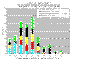 Chart of Munsell value of fuscus Although figures have been prepared with most care, I take full responsibility for all errors in any chart and table. Chart of Munsell value of fuscus Although figures have been prepared with most care, I take full responsibility for all errors in any chart and table. |
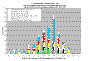 Chart of Munsell value for intermedius Although figures have been prepared with most care, I take full responsibility for all errors in any chart and table. Chart of Munsell value for intermedius Although figures have been prepared with most care, I take full responsibility for all errors in any chart and table. |
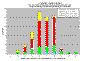 Chart of Munsell value for graellsii Although figures have been prepared with most care, I take full responsibility for all errors in any chart and table. Chart of Munsell value for graellsii Although figures have been prepared with most care, I take full responsibility for all errors in any chart and table. |
Table of results from Barth's researchAlthough figures have been prepared with most care, I take full responsibility for all errors in any chart and table. |
Tables & Graph
| starting date:
|
|
|
|
|
19 Nov
|
| week no:
|
43
|
44
|
45
|
46
|
47
|
| REM 0
|
113
|
122
|
2
|
5
|
3
|
| REM 1
|
56
|
3
|
0
|
0
|
0
|
| REM 2
|
55
|
9
|
0
|
0
|
0
|
| REM 3
|
7
|
1
|
0
|
0
|
0
|
| REM 4
|
2
|
0
|
0
|
0
|
0
|
| REM 5
|
1
|
0
|
0
|
0
|
0
|
| REM 6
|
0
|
0
|
0
|
0
|
0
|
| REM 7
|
0
|
0
|
0
|
0
|
0
|
| REM 8
|
0
|
0
|
0
|
0
|
0
|
| REM 9
|
0
|
0
|
0
|
0
|
0
|
| REM 10
|
0
|
0
|
0
|
0
|
0
|
|
|
0
|
0
|
0
|
0
|
0
|
| n =
|
234
|
135
|
2
|
5
|
3
|
| average P =
|
0.9
|
0.2
|
0.0
|
0.0
|
0.0
|
| 95% CID =
|
0.13
|
0.10
|
0.00
|
0.00
|
0.00
|
| inverse =
|
1.97
|
1.98
|
12.71
|
2.78
|
4.30
|
| Variantie (s2) =
|
0.97
|
0.33
|
0.00
|
0.00
|
0.00
|
| SD (s) =
|
0.98
|
0.57
|
0.00
|
0.00
|
0.00
|
| SE (sx) =
|
0.06
|
0.05
|
0.00
|
0.00
|
0.00
|
|
|
|
|
|
|
|
| % class:
|
|
|
|
|
|
| 0
|
48
|
90
|
100
|
100
|
100
|
| 1
|
24
|
2
|
0
|
0
|
0
|
| 2
|
24
|
7
|
0
|
0
|
0
|
| 3
|
3
|
1
|
0
|
0
|
0
|
| 4
|
1
|
0
|
0
|
0
|
0
|
| 5
|
0
|
0
|
0
|
0
|
0
|
| 6
|
0
|
0
|
0
|
0
|
0
|
| 7
|
0
|
0
|
0
|
0
|
0
|
| 8
|
0
|
0
|
0
|
0
|
0
|
| 9
|
0
|
0
|
0
|
0
|
0
|
| 10
|
0
|
0
|
0
|
0
|
0
|
|
|
|
|
|
|
|
|
|
100
|
100
|
100
|
100
|
100
|
REM0 = 0 old primaries left (P10 dropped).

Above: Scatter Plot for PMS in adult Lesser Black-backed Gulls. Number of remaining old primaries throughout the year (arrested moult excluded). Sample size is 6.171 birds.

Above: Scatter Plot for PMS in adult Lesser Black-backed Gulls. Number of remaining old primaries for November (arrested moult excluded). Sample size for this graph is 12 ringed birds + 367 unringed birds.
starting date:
|
29 Oct
|
05 Nov
|
12 Nov
|
26 Nov
|
week no:
|
44
|
45
|
46
|
48
|
NEW 0
|
0
|
0
|
0
|
0
|
NEW P1
|
0
|
0
|
0
|
0
|
NEW P2
|
0
|
0
|
0
|
0
|
NEW P3
|
1
|
1
|
0
|
0
|
NEW P4
|
1
|
1
|
0
|
0
|
NEW P5
|
5
|
6
|
1
|
0
|
NEW P6
|
10
|
13
|
2
|
0
|
NEW P7
|
96
|
115
|
31
|
1
|
NEW P8
|
164
|
145
|
94
|
1
|
NEW P9
|
71
|
18
|
39
|
22
|
NEW P10
|
2
|
13
|
11
|
19
|
|
|
|
|
|
n =
|
350
|
312
|
178
|
43
|
average NEW P =
|
7.8
|
7.6
|
8.1
|
9.4
|
95% CID =
|
0.10
|
0.11
|
0.13
|
0.20
|
inverse =
|
1.97
|
1.97
|
1.97
|
2.02
|
Variantie (s2) =
|
0.83
|
0.91
|
0.72
|
0.43
|
SD (s) =
|
0.91
|
0.95
|
0.85
|
0.66
|
SE (sx) =
|
0.05
|
0.05
|
0.06
|
0.10
|
|
|
|
|
|
% class
|
|
|
|
|
0
|
0
|
0
|
0
|
0
|
1
|
0
|
0
|
0
|
0
|
2
|
0
|
0
|
0
|
0
|
3
|
0
|
0
|
0
|
0
|
4
|
0
|
0
|
0
|
0
|
5
|
1
|
2
|
1
|
0
|
6
|
3
|
4
|
1
|
0
|
7
|
27
|
37
|
17
|
2
|
8
|
47
|
46
|
53
|
2
|
9
|
20
|
6
|
22
|
51
|
10
|
1
|
4
|
6
|
44
|
|
|
|
|
|
% control:
|
100
|
100
|
100
|
100
|
NEW0 = no new primaries visible (arrested moult excluded in this analysis). So either P1 still old, or P1 dropped, but the very tip still not visible.
NEW1 = P1 longest new primary. Range between "at least the tip of P1 is visible" until "tip of P2 still shorter than P1".
NEW2 = P2 longest new primary. NEW3 = etc.

Above: Scatter Plot for PMS in adult Lesser Black-backed Gulls throughout the year. Longest new primary is classified "fully grown". Sample size is 2.969 birds. Birds scored on NEW primaries (arrested moult excluded).

Above: Scatter Plot for PMS in adult Lesser Black-backed Gulls. Scoring on longest new primary, which is classified "fully grown" for November (arrested moult excluded). Sample size for this graph is 9 ringed birds + 874 unringed birds.
The earliest date for birds with missing primaries is 30 April 2006, which is not the earliest day in our complete sample. We scored 98 Lesser Black-backed Gulls prior to that date, some already in February. As can be expected, none of these was in primary moult, and this group was excluded in our further analysis as it will only result in a misfit for the onset of moult, using linear regression statistics.
The last scoring days were in November, with a larger sample (133 adults) on 04 November 2010. From that date we have the last birds with retaining old primaries (13 birds with 1, 2 or even 3 old primaries; 120 birds with no old primaries left). From other days in November, only 10 birds were scored (all ringed adults). They all had no old primaries left.
The first tine a new primary (P1) was visible, was on 08 May 2006. Prior to this date, birds were scored missing inner primaries, but the very tip was still not visible (and therefore not scored). As soon as the tip of P1 was visible, this was automatically scored "fully grown" For the other primaries to be scored fully grown, they had to exceed the previous primary in length (so P2 fully grown, only from when it is longer than P1).
|
Netherlands
|
|
||||
|
PMS range
|
N:
|
Average PMS
|
PMS range
|
N:
|
Average PMS
|
1-15 apr
|
10
|
49
|
10
|
8-10
|
216
|
9,9
|
16-30 apr
|
10
|
47
|
10
|
10
|
197
|
10,0
|
1-15 may
|
8-10
|
849
|
9,8
|
8-10
|
167
|
9,9
|
16-31 may
|
7-10
|
380
|
9,7
|
7-10
|
76
|
9,5
|
1-15 jun
|
8-10
|
104
|
9,6
|
7-10
|
33
|
8,6
|
16-30 jun
|
7-10
|
253
|
9,7
|
6-10
|
65
|
8,2
|
1-15 jul
|
6-10
|
605
|
9,2
|
5-10
|
176
|
7,4
|
16-31 jul
|
-
|
-
|
-
|
4-8
|
44
|
6,4
|
1-15 aug
|
3-10
|
143
|
6,6
|
3-10
|
165
|
5,2
|
16-31 aug
|
2-10
|
1284
|
5,4
|
3-8
|
127
|
4,6
|
1-15 sep
|
1-10
|
300
|
3,6
|
0-7
|
234
|
3,3
|
16-30 sep
|
0-7
|
645
|
2,9
|
0-7
|
173
|
2,1
|
1-15 oct
|
0-9
|
733
|
2,2
|
0-4
|
328
|
0,9
|
16-31 oct
|
0-10
|
750
|
1,3
|
0-3
|
244
|
0,3
|
1-15 nov
|
0-3
|
138
|
0,2
|
0-3
|
604
|
0,1
|
16-30 nov
|
0
|
5
|
0
|
0-1
|
341
|
0,0
|
LINEAR REGRESSION
Onset of primary moult can best be illustrated by a sinusoid for the first few weeks and last weeks, but there appears to be linear dependency over much of the central moult period.
LINEAR REGRESSION FOR OLD REMAINING PRIMARIES
Complete sample: Linear regression (n = 6171, R2= 0.820, sign: P<0,000)
PMS = -0,381* WEEK + 17,967
Ringed adults: Linear regression (n = 2069, R2= 0.800, sign: P<0,000)
PMS = -0,325* WEEK + 16,270
Unringed adult: Linear regression (n = 4102, R2= 0.779, sign: P<0,000)
PMS = -0,513* WEEK + 23,031
LINEAR REGRESSION FOR NEW FULLY GROWN PRIMARIES
Complete sample: Linear regression (n = 2969, R2= 0.930, sign: P<0,000)
PMS = 0,302* WEEK - 5,933
Ringed adults: Linear regression (n = 1209, R2= 0.888, sign: P<0,000)
PMS = 0,252* WEEK - 4,747
Unringed adult: Linear regression (n = 1760, R2= 0.833, sign: P<0,000)
PMS = 0,442* WEEK - 11,906
Adult LBBG (graellsii, intermedius): primary moult score. |
|||
| new primaries, Nov 06 2001 | moult score, Dec 22 2000 | ||
| p3 | 1 | 46 | 1 |
| p4 | 1 | 48 | 3 |
| p5 | 6 | 49 | 7 |
| p6 | 13 | 50 | 46 |
| p7 | 107* | - | - |
| p8 | 142 | - | - |
| p9 | 15** | - | - |
| p10 | 12 | - | - |
| n: | 155 | - | 57 |
| m: | 7,05 | - | 49,7 |
| n: total. m: average. *: incl left green KA5 (Germany), left orange NS2 (Netherlands), right orange AL6 (Netherlands), left white 4 right red H. **: left orange ES97, EY42 (both Netherlands). Note: The survey November 06 2001, was done at the Maasvlakte, a mixed group of NW European LBBG races. For explanation of moult score, see Topography Section. |
|||
GRAELLSII FROM ICELAND
 Lesser Black-backed Gull graellsii Y250 adult, October - December 2016, Matosinhos beach, Matosinhos, Portugal. Picture: José Marques.
 Lesser Black-backed Gull graellsii YM23 adult, December 01 2015, Matosinhos Beach, Matosinhos, Portugal. Picture: José Marques.
GRAELLSII FROM BRITAIN
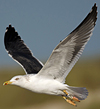 Lesser Black-backed Gull graellsii 1HF adult, November 15 2016, Torreira beach, Aveiro, Matosinhos, Portugal. Picture: José Marques.
 Lesser Black-backed Gull graellsii 3.Z8 adult, November 09 2016, Espinho Beach, Espinho, Aveiro, Portugal. Picture: José Marques.
 Lesser Black-backed Gull graellsii 4.Z3 8CY-9CY, December 2015 & September - November 2016, Torreira beach, Beira Litoral, Portugal. Picture: José Marques.
 Lesser Black-backed Gull graellsii 6.T3 adult, December 23 2016, Matosinhos beach, Matosinhos, Portugal. Picture: José Marques.
 Graellsii 6cy FAF 21 November
2003, Westkapelle, the
Netherlands. From Orfordness.
Graellsii 6cy FAF 21 November
2003, Westkapelle, the
Netherlands. From Orfordness.  LBBG 5cy 4XF November 22 2009, Madrid, Spain. Picture: Delfín González. Also as 3-4cy Febr.
 Lesser Black-backed Gull graellsii AXA.L 7CY, December 06 2016, Matosinhos beach, Matosinhos, Portugal. Picture: José Marques.
 Lesser Black-backed Gull graellsii HYE adult, November 24 2016, Matosinhos Beach, Matosinhos, Portugal. Picture: José Marques.
 LBBG 7cy W5ZG November 15 2009, Madrid, Spain. Photo by Delfín González.
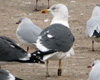 LBBG 12cy T5LW December 12 2010, Madrid, Spain. Photo by Delfín González.
 Lesser Black-backed Gull graellsii 0.V7 8CY, September - November 2016, Matosinhos Beach, Matosinhos, Portugal. Picture: José Marques.
 Lesser Black-backed Gull graellsii 5.H6 6CY-7CY, December 2015 - January 2016, Matosinhos beach, Matosinhos, Portugal. Picture: José Marques.
 Lesser Black-backed Gull graellsii 0AF9 adult, November 15 2016, Torreira beach, Aveiro, Portugal. Picture: José Marques.
 Lesser Black-backed Gull graellsii 1AT0 adult, November 11 2016, Matosinhos Beach, Matosinhos, Portugal. Picture: José Marques.
 Lesser Black-backed Gull graellsii 1FA1 adult, October - November 2016, Matosinhos Beach, Matosinhos, Portugal. Picture: José Marques.
 Lesser Black-backed Gull graellsii 2AL6 adult, November 20 2015, Matosinhos beach, Matosinhos, Portugal. Picture: José Marques.
 Lesser Black-backed Gull graellsii 2AU3 adult, December 01 2015, Matosinhos Beach, Matosinhos, Portugal. Picture: José Marques.
 Lesser Black-backed Gull graellsii 3AL2 adult, December 06 2016, Matosinhos beach, Matosinhos, Portugal. Picture: José Marques.
 Lesser Black-backed Gull graellsii 3AP7 4CY-5CY, December 2015 & October - November 2016, Matosinhos Beach, Matosinhos, Portugal. Picture: José Marques.
 Lesser Black-backed Gull graellsii 3AS1 adult, November 07 2016, Leixões harbour, Matosinhos, Portugal. Picture: José Marques.
 Lesser Black-backed Gull graellsii 3AX9 adult, November 09 2016, Espinho Beach, Espinho, Aveiro, Portugal. Picture: José Marques.
 Lesser Black-backed Gull graellsii 3FA5 adult, November 15 2016, Torreira beach, Aveiro, Portugal. Picture: José Marques.
 Lesser Black-backed Gull graellsii 4AX5 adult, December 07-10 2015, Leixões Harbour, Matosinhos, Portugal. Picture: José Marques.
 Lesser Black-backed Gull graellsii 5AV9 adult, November 15 2016, Torreira beach, Aveiro, Portugal. Picture: José Marques.
 Lesser Black-backed Gull graellsii 6CF6 adult, September 2016 - January 2017, Matosinhos beach, Matosinhos, Portugal. Picture: José Marques.
 Lesser Black-backed Gull graellsii 6CT6 adult, November 15 2016, Torreira beach, Aveiro, Portugal. Picture: José Marques.
 Lesser Black-backed Gull graellsii 7AF2 6CY, December 01 2015, Matosinhos Beach, Matosinhos, Portugal. Picture: José Marques.
 Lesser Black-backed Gull graellsii 7AV6 adult, November 15 2016, Torreira beach, Aveiro, Portugal. Picture: José Marques.
 Lesser Black-backed Gull graellsii 7AX0 adult, November 24 2016, Matosinhos beach, Matosinhos, Portugal. Picture: José Marques.
 Lesser Black-backed Gull graellsii 8AC0 adult, November 03 2016, Matosinhos Beach, Matosinhos, Portugal. Picture: José Marques.
 Lesser Black-backed Gull graellsii 8AJ1 adult, November - December 2015, Matosinhos Beach, Matosinhos, Portugal. Picture: José Marques.
 Lesser Black-backed Gull graellsii 8AK3 adult, October - December 2015 & October - November 2016 & Augsut 2017, Matosinhos beach, Matosinhos, Portugal. Picture: José Marques.
 Lesser Black-backed Gull graellsii 8CS1 adult, December 2015 & September 2016 - February 2017, Leixões harbour, Matosinhos, Portugal. Picture: José Marques.
 Lesser Black-backed Gull graellsii 9AH6 adult, October - December 2016, Matosinhos beach, Matosinhos, Portugal. Picture: José Marques.
 Lesser Black-backed Gull graellsii 9AX4 adult, November 15 2016, Torreira beach, Aveiro, Portugal. Picture: José Marques.
 Lesser Black-backed Gull graellsii M+N 5CY & 7CY, December 2015 & February 2017, Matosinhos, Portugal. Picture: José Marques.
 LBBG 8cy P:U November 28 2010, Madrid, Spain. Photo by Delfín González.
 Lesser Black-backed Gull graellsii F:Z 11CY, November 20 2015, Matosinhos Beach, Matosinhos, Portugal. Picture: José Marques.
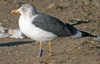 LBBG 7cy J:C December 04 2010, Madrid, Spain. Photo by Delfín González.
 Lesser Black-backed Gull graellsii JS adult, November 24 2016, Matosinhos Beach, Matosinhos, Portugal. Picture: José Marques.
 Lesser Black-backed Gull graellsii 4C2B adult, November 15 2016, Matosinhos beach, Matosinhos, Portugal. Picture: José Marques.
 Lesser Black-backed Gull graellsii 1T7:C 5CY, November 15 2016, Torreira beach, Aveiro, Matosinhos, Portugal. Picture: José Marques.
 Lesser Black-backed Gull graellsii T:69L 6CY, November 03 2016, Matosinhos Beach, Matosinhos, Portugal. Picture: José Marques.
 Lesser Black-backed Gull graellsii T:87J adult, November - December 2016, Matosinhos, Portugal. Picture: José Marques.
 Lesser Black-backed Gull 28cy BTO GK38437 2008-2011, Boulogne sur mer, NW France. Picture: Jean-Michel Sauvage.
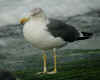 Graellsii adult GG-39638 November 20 2000,
Westkapelle, the
Netherlands.
Graellsii adult GG-39638 November 20 2000,
Westkapelle, the
Netherlands. GRAELLSII FROM FAROE ISLANDS
 Lesser Black-backed Gull graellsii 4F-3002 adult, September - November 2016, Matosinhos Beach, Matosinhos, Portugal. Picture: José Marques.
GRAELLSII FROM FRANCE
 Lesser Black-backed Gull graellsii 3:AAW adult, December 02 2016, Leixões harbour, Matosinhos, Portugal. Picture: José Marques.
 Lesser Black-backed Gull graellsii 3:DKX adult, November 09 2016, Espinho Beach, Espinho, Aveiro, Portugal. Picture: José Marques.
 Lesser Black-backed Gull graellsii FRP DB100210 adult, November 14 2016, Matosinhos beach, Matosinhos, Portugal. Picture: José Marques.
DUTCH INTERGRADES FROM BELGIUM
 Lesser Black-backed Gull graellsii D.MAV 11CY, November 09 2016, São Félix da Marinha (Praia da Granja), Beira Litoral, Portugal. Picture: José Marques.
 Lesser Black-backed Gull graellsii G.ZAW 15CY, December 06-09 2016, Leixões Harbour, Matosinhos, Portugal. Picture: José Marques.
 Lesser Black-backed Gull graellsii HLA.V 9CY, November 09 2016, Espinho Beach, Espinho, Aveiro, Portugal. Picture: José Marques.
 Lesser Black-backed Gull adult KCAC November 06 2008, Boulogne-sur-mer, NW France. Picture: Jean-Michel Sauvage.
 LBBG adult KG.AS November 30 2008, Madrid, Spain. Photo by Delfín González.
 Lesser Black-backed Gull graellsii KG.AW adult, November 15 2016, Torreira beach, Aveiro, Matosinhos, Portugal. Picture: José Marques.
 Lesser Black-backed Gull graellsii KZ.AN adult, November 15 2016, Torreira beach, Aveiro, Matosinhos, Portugal. Picture: José Marques.
 LBBG
adult L-84891 November
02 2002, Westkapelle, the
Netherlands. Primary moult score (PMS) of 49.
LBBG
adult L-84891 November
02 2002, Westkapelle, the
Netherlands. Primary moult score (PMS) of 49.  LBBG
5cy H-95698 20 November 2000, Westkapelle, the
Netherlands.
LBBG
5cy H-95698 20 November 2000, Westkapelle, the
Netherlands. DUTCH INTERGRADES FROM HOLLAND
 LBBG 8cy E568 December 31 2008, Madrid, Spain. Photo by Delfín González.
 LBBG
12cy MH1 03 November 2004, Westkapelle, the
Netherlands. Ringed as a pullus 08.07.1993. Picture Pim Wolf.
LBBG
12cy MH1 03 November 2004, Westkapelle, the
Netherlands. Ringed as a pullus 08.07.1993. Picture Pim Wolf.  LBBG 8cy E836 November
17 2002, Westkapelle, the
Netherlands. Primary moult score (PMS): 47. Ringed July 10 1995.
LBBG 8cy E836 November
17 2002, Westkapelle, the
Netherlands. Primary moult score (PMS): 47. Ringed July 10 1995.  LBBG 6cy EJ31 November 12
2000, Westkapelle, the
Netherlands. Primary moult score (PMS): 47.
LBBG 6cy EJ31 November 12
2000, Westkapelle, the
Netherlands. Primary moult score (PMS): 47.  LBBG
11cy AT0 Westkapelle, the Netherlands, November 01 2002. Ringed as pullus at
June 20 1992 at the Maasvlakte, the Netherlands.
LBBG
11cy AT0 Westkapelle, the Netherlands, November 01 2002. Ringed as pullus at
June 20 1992 at the Maasvlakte, the Netherlands. 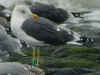 LBBG NN1 Westkapelle, the Netherlands, November 01 2002. Ringed as pullus at the
Maasvlakte, the Netherlands.
LBBG NN1 Westkapelle, the Netherlands, November 01 2002. Ringed as pullus at the
Maasvlakte, the Netherlands.  LBBG
8cy E139 Westkapelle, the Netherlands, November 02 2002. Ringed as pullus at the
Maasvlakte, the Netherlands on June 27 1995.
LBBG
8cy E139 Westkapelle, the Netherlands, November 02 2002. Ringed as pullus at the
Maasvlakte, the Netherlands on June 27 1995.  LBBG 11cy E564 November 20 2005, Westkapelle, the Netherlands.
 LBBG E760 November 1999 & 2004, Westkapelle, the Netherlands. Photo by Pim
Wolf.
LBBG E760 November 1999 & 2004, Westkapelle, the Netherlands. Photo by Pim
Wolf.  LBBG
9cy EE51 November 02 2002, Westkapelle, the Netherlands. Ringed as pullus at the
Maasvlakte, the Netherlands.
LBBG
9cy EE51 November 02 2002, Westkapelle, the Netherlands. Ringed as pullus at the
Maasvlakte, the Netherlands. 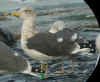 LBBG
7cy EJ47 Westkapelle, the Netherlands, November 02 2002. Ringed as pullus at the
Maasvlakte, the Netherlands, June 24 1996. PMS: 46.
LBBG
7cy EJ47 Westkapelle, the Netherlands, November 02 2002. Ringed as pullus at the
Maasvlakte, the Netherlands, June 24 1996. PMS: 46.  LBBG
12cy X73 Westkapelle, the Netherlands, November
01 2002. Primary Moult Score (PMS) of 47.
LBBG
12cy X73 Westkapelle, the Netherlands, November
01 2002. Primary Moult Score (PMS) of 47.  Lesser Black-backed Gull graellsii 6K adult, December 06-07 2016, Matosinhos beach, Matosinhos, Portugal. Picture: José Marques.
 Lesser Black-backed Gull graellsii LY adult, October 2015 - February 2016 & November 2016 - January 2017, Matosinhos, Portugal. Picture: José Marques.
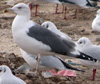 LBBG adult 1B December 06 2012, Landfill VRSU de Colmenar Viejo, Madrid, Spain. Picture: Delfín González.
  Lesser Black-backed Gull graellsii B.V adult, November 24 2016, Matosinhos Beach, Matosinhos, Portugal. Picture: José Marques.
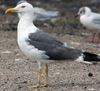 LBBG adult D7 August, September 2010 & November 2012, Boulogne-sur-Mer, NW France. Picture: Jean-Michel Sauvage.
 Lesser Black-backed Gull graellsii R.Z adult, November 14 2016, Matosinhos beach, Matosinhos, Portugal. Picture: José Marques.
 Lesser Black-backed Gull adult CC November 01 2010, Outreau-Boulogne, NW France. Picture: Jean-Michel Sauvage.
 LBBG adult MH December 31 2008, Madrid, Spain. Photo by Delfín González.
 LBBG 6cy X1 December 02 2012, Madrid, Spain. Photo by Delfín González.
 Lesser Black-backed Gull graellsii KP adult, December 01 2015, Matosinhos Beach, Matosinhos, Portugal. Picture: José Marques.
 LBBG EZ November 04 2004,
Westkapelle, the
Netherlands. Picture Pim Wolf.
LBBG EZ November 04 2004,
Westkapelle, the
Netherlands. Picture Pim Wolf.  LBBG H5 Westkapelle, the Netherlands, November 15 2003. Ringed as adult at
Moerdijk, the Netherlands. PMS: 49.
LBBG H5 Westkapelle, the Netherlands, November 15 2003. Ringed as adult at
Moerdijk, the Netherlands. PMS: 49.  Lesser Black-backed Gull graellsii T2 adult, May 2005, May 2006, November 2015 & October 2016, the Netherlands & Portugal. Picture: Mars Muusse & José Marques.
 LBBG adult 6K December 02 2012, Landfill VRSU de Colmenar Viejo, Madrid, Spain. Picture: Delfín González.
  Lesser Black-backed Gull graellsii 7.A 9CY, November 15 2016, Torreira beach, Beira Litoral, Portugal. Picture: José Marques.
 Lesser Black-backed Gull graellsii 7.Z adult, December 09 2016, Matosinhos beach, Matosinhos, Portugal. Picture: José Marques.
 Lesser Black-backed Gull graellsii CY 7CY & 9CY, July 2014 & September - November 2016, NW France & Portugal. Picture: Jean-Michel Sauvage & José Marques.
 Lesser Black-backed Gull graellsii 66 adult, December 2016 - January 2017, Matosinhos, Portugal. Picture: José Marques.
 Lesser Black-backed Gull graellsii CF adult, November 15 2016, Torreira beach, Beira Litoral, Portugal. Picture: José Marques.
 Lesser Black-backed Gull graellsii GX adult, November 11 2016, Matosinhos Beach, Matosinhos, Portugal. Picture: José Marques.
 Lesser Black-backed Gull graellsii K.BNT adult, November 14 2016, Matosinhos beach, Matosinhos, Portugal. Picture: José Marques.
 LBBG M.AAA December 13 2009, Madrid, Spain. Photo by Delfín González. Also seen in Sept.
 Lesser Black-backed Gull adult Y.AHJ 2009-2011, France & the Netherlands. Pictures: Ruud Altenburg & Jean-Michel Sauvage.
 LBBG Y.AKZ 2010-2011, IJmuiden-Westkapelle, the Netherlands.
  Lesser Black-backed Gull graellsii NLA 5.440.202 8CY, November 29 2016, Boulogne sur Mer, France. Picture Jean-Michel Sauvage.
 Lesser Black-backed Gull graellsii NLA 5.463.260 November 28 2015, Boulogne-sur-Mer, France. Picture: Jean-Michel Sauvage.
 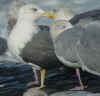 LBBG Arnhem 5...5 Westkapelle, the Netherlands, November
02 2002. Ringed in the Netherlands. PMS of 44.
LBBG Arnhem 5...5 Westkapelle, the Netherlands, November
02 2002. Ringed in the Netherlands. PMS of 44.  Lesser Black-backed Gull graellsii N0L9 adult, December 01 2015, Matosinhos Beach, Matosinhos, Portugal. Picture: José Marques.
 LBBG adult N567 November 23 2008, Madrid, Spain. Photo by Delfín González.
LBBG FROM PORTUGAL
 Lesser Black-backed Gull M:011 adult, December 2015 & September - November 2016, Matosinhos, Portugal. Picture: José Marques.
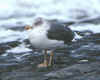 Graellsii adult MOI
0216 November
05 1999, Westkapelle, the
Netherlands. Primary Moult Score (PMS) of 45.
Graellsii adult MOI
0216 November
05 1999, Westkapelle, the
Netherlands. Primary Moult Score (PMS) of 45. GRAELLSII FROM GERMANY
 Lesser Black-backed Gull graellsii H.04K 10CY-12CY, December 2015 & November 2016 - January 2017, Matosinhos, Portugal. Picture: José Marques.
INTERMEDIUS FROM DENMARK
Lesser Black-backed Gull intermedius V.104 9CY, December 02-09 2016, Matosinhos beach, Matosinhos, Portugal. Picture: José Marques. Lesser Black-backed Gull intermedius V.941 8CY, November 14 2016, Matosinhos beach, Matosinhos, Portugal. Picture: José Marques.
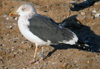 LBBG adult V.C4F December 04 2010, Madrid, Spain. Photo by Delfín González.
 Lesser Black-backed Gull intermedius V.C6K 7CY, December 06-09 2016, Matosinhos beach, Matosinhos, Portugal. Picture: José Marques.
 Lesser Black-backed Gull intermedius V.VZ5 adult, December 11 2015, Matosinhos beach, Matosinhos, Portugal. Picture: José Marques.
 Lesser Black-backed Gull intermedius V.W7V 3CY, December 09 2016, Matosinhos beach, Matosinhos, Portugal. Picture: José Marques.
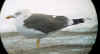 Intermedius adult K.234458 26 November 2000,
Westkapelle, the Netherlands. Born on Anholt in Kattengat, Denmark. Click
the thumbnail to find several other ring-recoveries from Denmark.
Intermedius adult K.234458 26 November 2000,
Westkapelle, the Netherlands. Born on Anholt in Kattengat, Denmark. Click
the thumbnail to find several other ring-recoveries from Denmark.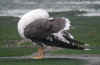 LBBG 423445823 November 2003, Westkapelle, the
Netherlands. Picture Pim Wolf.
LBBG 423445823 November 2003, Westkapelle, the
Netherlands. Picture Pim Wolf. INTERMEDIUS FROM NORWAY
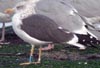 Lesser Black-backed Gull intermedius J908 8CY, November 20 2005, Westkapelle, the Netherlands. Picture: Pim Wolf.
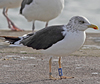 Lesser Black-backed Gull intermedius JN38 16CY, November 09 2015, Boulogne-sur-Mer, France. Picture: Jean-Michel Sauvage.
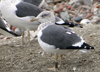 LBBG adult J51E December 31 2008, Madrid, Spain. Photo by Delfín González.
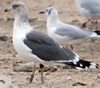 LBBG adult JE8J October & December 2012, Madrid, Spain. Photo by Delfín González.
 Intermedius 467271 November 26 2000, Westkapelle, the
Netherlands. PMS: 48.
Intermedius 467271 November 26 2000, Westkapelle, the
Netherlands. PMS: 48.  intermedius 25cy 492441 October & November, Westkapelle, the Netherlands. Picture Pim Wolf.
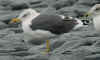 Intermedius 494670 November 02 2003, Westkapelle, the
Netherlands.
Intermedius 494670 November 02 2003, Westkapelle, the
Netherlands.  Lesser Black-backed Gull intermedius NOS 4107441 17CY-18CY, September-November 2002 & November 2003, Westkapelle, the Netherlands.
 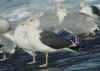 Intermedius 4132983 15CY, Westkapelle, the Netherlands, November 02 2002. Ringed in southern
Norway. PMS: 39 with P9-P10 still old.
Intermedius 4132983 15CY, Westkapelle, the Netherlands, November 02 2002. Ringed in southern
Norway. PMS: 39 with P9-P10 still old. 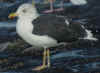 Lesser Black-backed Gull intermedius NOS 4134634 16cy, November 02 2002, Westkapelle, the Netherlands.
  intermedius 4141882 November 24 2004, Westkapelle, the Netherlands. Picture Pim Wolf.
  Intermedius 4141883 Westkapelle, the Netherlands, November 02 2002. Ringed in southern
Norway. PMS: 42.
Intermedius 4141883 Westkapelle, the Netherlands, November 02 2002. Ringed in southern
Norway. PMS: 42.  Lesser Black-backed Gull intermedius NOS 4164734 12cy, November 01-02 2002, Westkapelle, the Netherlands.
  Intermedius ??69373 Westkapelle, the Netherlands, November 01 2002. Ringed in southern
Norway. PMS: 37 with P9-P10 still old.
Intermedius ??69373 Westkapelle, the Netherlands, November 01 2002. Ringed in southern
Norway. PMS: 37 with P9-P10 still old.  Lesser Black-backed Gull intermedius NOS 4178017 12cy, November 01 2002, Westkapelle, the Netherlands.
  Intermedius 41??437 Westkapelle, the Netherlands, November 01 2002. PMS 45 with P8 fully
grown.
Intermedius 41??437 Westkapelle, the Netherlands, November 01 2002. PMS 45 with P8 fully
grown.  Intermedius 4195582 7cy December 21 2000, Westkapelle, the
Netherlands. P8 almost fully grown, P9-P10 retarded. PMS: 39.
Intermedius 4195582 7cy December 21 2000, Westkapelle, the
Netherlands. P8 almost fully grown, P9-P10 retarded. PMS: 39.  intermedius 4210403 Westkapelle, the Netherlands, November
05 1999. Photo by Pim Wolf. PMS: 42.
intermedius 4210403 Westkapelle, the Netherlands, November
05 1999. Photo by Pim Wolf. PMS: 42. INTERMEDIUS FROM SWEDEN
 Intermedius 12cy 8071437 26 November 2000, Westkapelle, the
Netherlands.
Intermedius 12cy 8071437 26 November 2000, Westkapelle, the
Netherlands.  intermedius 11cy & 14cy 8080923 November 2004 & 2007, Westkapelle, the Netherlands.
 LBBG 8081502 30 November 2003, Westkapelle, the
Netherlands. Picture Pim Wolf.
LBBG 8081502 30 November 2003, Westkapelle, the
Netherlands. Picture Pim Wolf.  Intermedius 9cy 8082746 December 21 2000 Westkapelle, the
Netherlands.
Intermedius 9cy 8082746 December 21 2000 Westkapelle, the
Netherlands. UN-RINGED LESSER BLACK-BACKED GULLS
 Lesser Black-backed Gull adult, November 02 2015, Utrecht, the Netherlands.
 Lesser Black-backed Gull adult, November 02 2015, Utrecht, the Netherlands.
 Lesser Black-backed Gull adult, November 02 2015, Utrecht, the Netherlands.
 Lesser Black-backed Gull adult, November 02 2015, Utrecht, the Netherlands.
 Lesser Black-backed Gull adult, November 02 2015, Utrecht, the Netherlands.
 Lesser Black-backed Gull adult, November 02 2015, Utrecht, the Netherlands.
 Lesser Black-backed Gull adult, November 09 2015, Utrecht, the Netherlands.
 Lesser Black-backed Gull adult, November 09 2015, Utrecht, the Netherlands.
 Lesser Black-backed Gull adult, November 09 2015, Utrecht, the Netherlands.
 Lesser Black-backed Gull adult, November 09 2015, Utrecht, the Netherlands.
 Lesser Black-backed Gull adult, November 09 2015, Utrecht, the Netherlands.
 LBBG intermedius and graellsii. Click the
thumbnail to find more (unringed) Lesser Black-backed Gulls.
LBBG intermedius and graellsii. Click the
thumbnail to find more (unringed) Lesser Black-backed Gulls.