 Lesser Black-backed Gull (graellsii & intermedius)
(last update: May 17 2015)
lbbg 1cy May
lbbg 1cy June
lbbg 1cy July
lbbg 1cy August
lbbg 1cy September
lbbg 1cy October
lbbg 1cy November
lbbg 1cy December
lbbg 2cy January
lbbg 2cy February
lbbg 2cy Mar-April
lbbg 2cy May
lbbg 2cy June
lbbg 2cy July
lbbg 2cy August
lbbg 2cy September
lbbg 2cy October
lbbg 2cy Nov - Dec
lbbg 3cy Jan-April
lbbg 3cy May
lbbg 3cy June
lbbg 3cy July
lbbg 3cy August
lbbg 3cy September
lbbg 3cy October
lbbg 3cy Nov - Dec
lbbg sub-ad Jan-April
lbbg sub-ad May
lbbg sub-ad June
lbbg sub-ad July
lbbg sub-ad Aug
lbbg sub-ad Sept
lbbg sub-ad Oct
lbbg sub-ad Nov
lbbg sub-ad Dec
lbbg adult January
lbbg adult February
lbbg adult March
lbbg adult April
lbbg adult May
lbbg adult June
lbbg adult July
lbbg adult August
lbbg adult September
lbbg adult October
lbbg adult Nov - Dec
second calendar year: October
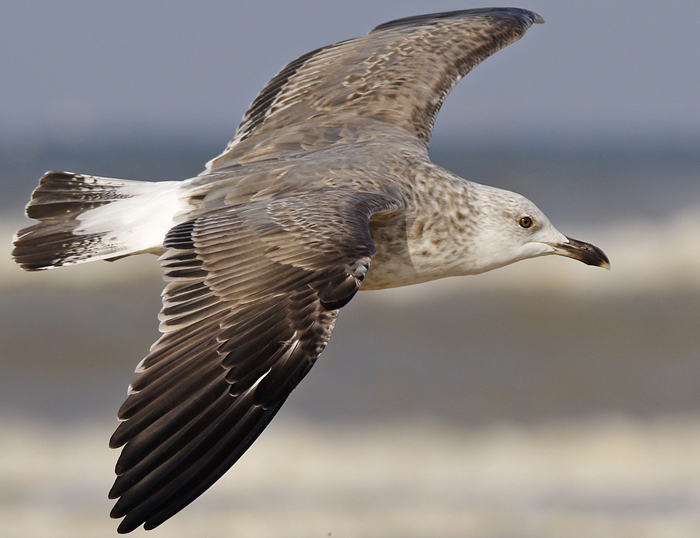
By October, all LBBG have left the colonies at the Maasvlakte (the Netherlands). In the pictures you can see what variation can be expected in 2cy LBBG by October in the Netherlands. The variation seems large, but overall, 2cy LBBG may be classified in the following categories:
Category I
Birds with predominantly second generation-like feathers (although some of tehse feathers may in fact be already third generation - often the fresh median covert row). Second generation feathers often show characteristic anchor pattern, barring or deep notches in the fringe. Some 2cy birds replace these feathers in summer for more or less the same kind of feathers. Often the median coverts show barring or club patterns while the greater coverts have dense spaghetti like barring. This group of LBBG don't have grey feathers in the scapular region and in general there are no "adult-like" features at all. So far, we were not able to determine this type to geographical locations and probably such type of LBBG may turn up in both graellsii and intermedius (although there is a tendency to allocate them to graellsii). Several birds of this group originated from U.K. colonies, from Belgium and green AH53 from northern Germany may be classified here as well. When birds of this type are heavily built, strong and robust in appearance, they may be mistaken for Yellow-legged Gulls (michahellis) in 2cy plumage. Although rare in October, some michahellis still have no grey scapulars.
Category II
There is an -intermediate- group: those 2cy LBBG with grey scapulars combined by strongly patterned wing-coverts. As can be seen in the spring section of 3cy, this may be the plumage in which they return next year.
Category III
In October, 2cy LBBG move into the 'steady winter months' where moult is more or less suspended until early spring. However, some LBBG moult throughout the winter, at a lower pace. Others may appear very advanced and may show a 3cy spring plumage already by October, including the all grey adult-like scapular region and some grey median coverts. The lesser and greater coverts are still barred or with a club pattern. There are a few examples in the pictures, and NLA-5.361.744 can be classified to this group. This category of LBBG is as hard to allocate geographically as the other group.
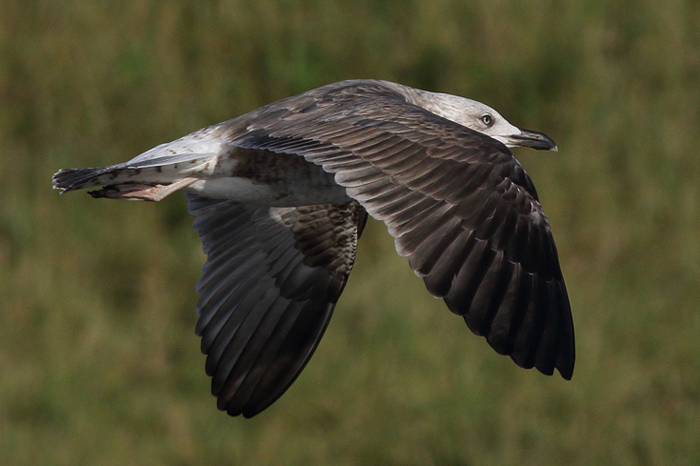
Partial moult in 2cy intermedius & graellsii
Although an undefined number of -predominantly intermedius- LBBG arrive from the wintering grounds with moulted wing-coverts and scapulars, the general idea is that, in line with large white-headed gulls of NW Europe, Lesser Black-backed Gulls start moulted from late April onwards: the complete moult. This complete moult includes all the wing-coverts, body-feathers, rectrices and of course the remiges. By September, the replacement of the last lesser coverts, inner secondaries and outer rectrices is finished, together with last to outer primaries.
By this time, the partial moult may start, including a various amount of wing-coverts, often a few upper tertials and in some birds a few of the rectrices are moulted again to third generation (all-white or almost all-white) tail-feathers. An example of such a bird with replaced rectrices can be found on this page.
Partial moult in the wing-coverts is commonly seen in the row which was moulted first last summer: the median covert row. When the complete moult started last summer, the median coverts were dropped first and can look worn at the fringes by October, as several images show (especially in birds of category I). Part of these worn median coverts are dropped again in autumn and replaced by third generation median coverts, which may vary in pattern: in some bird the new median coverts are plain grey, as is seen in 3cy LBBG or older birds. Images of 2cy LBBG with such grey median coverts can be found in category II. Other birds replace the median coverts for new third generation coverts with again a pattern of bars or anchors, much like the pattern found in second generation feathers. Representatives of this type of birds can be found in category I and II. Sometimes these new third generation feathers may be hard to detect, simply because they so much resemble the older second generation feathers. Easiest clue: compare the condition of the fringes. Note however that there is a short time overlap in the moult of the last lesser coverts (and sometimes the growing central greater coverts) and the start of the partial moult in the upper tertials and often in the median and lower lesser coverts.
 Median coverts second generation. |
 Median coverts third generation. |
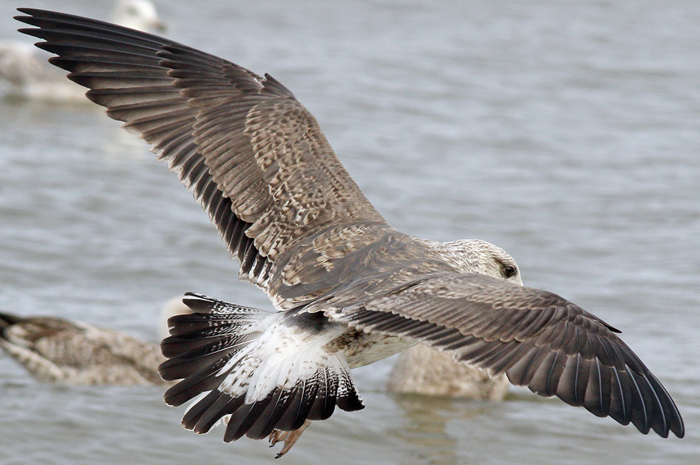
Arrested primary moult in autumn
Arrested or, much better, suspended moult in the primaries is a rare phenomenon in 2cy LBBG graellsii and intermedius. The common moult stage in 2cy LBBG is P9 fully grown and P10 slightly shorter than P9, often at the length of P7 or P8 by the first week of October. Some birds are a little behind in moult with P8 the longest primary.
However, by October it's possible, though highly unusual to find 2cy LBBG still with old juvenile outer primaries. Occasionally such birds can be found while scanning flocks of migrating birds in NW Europe. The phenomenon of arrested or suspended moult seems to be more frequent in spring 3cy LBBG or in autumn sub-adult LBBG. There is a tendency to classify most of these birds in the group of intermedius, as the general characteristics of many these birds suggest: compact, small birds, short legs, short neck, small and slim bill; cute birds in general, somewhat reminiscent of Common Gulls in general jizz.
2cy birds with suspended primary moult often show suspended moult or delayed moult in the secondaries. An example of suspended primary moult can be seen in this image.
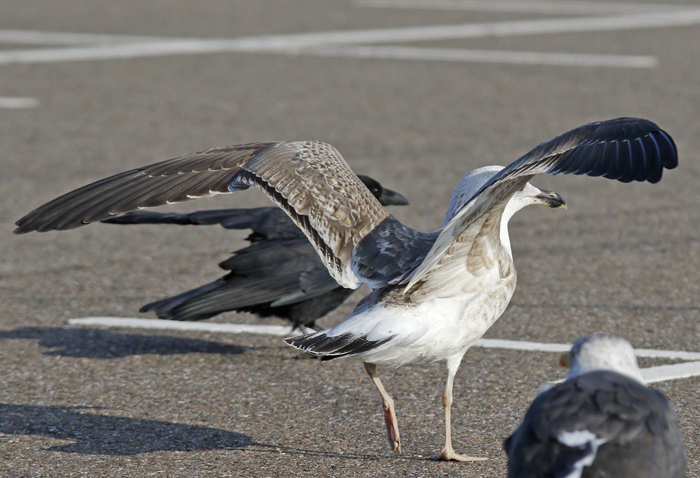
 Lesser Black-backed Gull graellsii NDN.U 2CY-3CY, October 2015 - March 2016, Matosinhos, Portugal. Picture: José Marques.
  Lesser Black-backed Gull graellsii NFN.W 2CY, October 02 2015, Portimao, Portugal. Picture: Carl Baggott.
 Lesser Black-backed Gull graellsii 1CS9 2CY-4CY, October 2015, June 2016 & June 2017, Matosinhos, Coimbra, Portugal. Picture: José Marques.
  Lesser Black-backed Gull graellsii 3FH6 2CY, October 06 2016, Matosinhos beach, Matosinhos, Portugal. Picture: José Marques.
 Lesser Black-backed Gull graellsii 4CN8 2CY, October 04 2015, Portimao, Portugal. Picture: Carl Baggott.
 Lesser Black-backed Gull graellsii 9FF3 2CY, October 25 2016, Matosinhos beach, Matosinhos, Portugal. Picture: José Marques.
 Lesser Black-backed Gull graellsii F:046 2CY-4CY, October 2015, February 2016 - January 2017, Matosinhos beach, Matosinhos, Portugal. Picture: José Marques.
 Lesser Black-backed Gull graellsii F:234 2CY, October 10 2016, Leixões harbour, Matosinhos, Portugal. Picture: José Marques.
 Lesser Black-backed Gull graellsii F:293 2CY, October 31 2016, Espinho Beach, Espinho, Aveiro, Portugal. Picture: José Marques.
 Lesser Black-backed Gull graellsii 6M7:C 2CY, October 06 2016, Matosinhos beach, Matosinhos, Portugal. Picture: José Marques.
 LBBG 2cy 3XF October 09 2005, Madrid, Spain. Picture: Delfín González. Also as Sept 3cy.
 Lesser Black-backed Gull graellsii L+R 2CY-3CY, October 2015 & November 2016, São Felix da Marinha, V.N.Gaia, Portugal. Picture: José Marques.
 Lesser Black-backed Gull graellsii F+Z 2CY, September - October 2016, Matosinhos beach, Matosinhos, Portugal. Picture: José Marques.
 LBBG J:X October 21 2007, Madrid, Spain. Photo by Delfín González.
 2cy
LBBG GJ 84559 October 08 2001, Westkapelle, the Netherlands.
2cy
LBBG GJ 84559 October 08 2001, Westkapelle, the Netherlands.France LBBG: graellsii 'Dutch intergrade'
 Lesser Black-backed Gull graellsii 3:AXS 2CY, October 03 2015, Portimao, Portugal. Picture: Carl Baggott.
 LBBG 139K October 19 2008, Madrid, Spain. Picture: Delfín González.
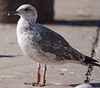 Lesser Black-backed Gull graellsii 3:CYV 2CY, October 25 2016, Matosinhos beach, Matosinhos, Portugal. Picture: José Marques.
Belgium LBBG: graellsii 'Dutch intergrade'
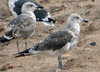 LBBG 2cy HZAD October 25 2009, Madrid, Spain. Photo by Delfín González.
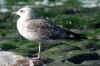 LBBG 2cy L-102569 October 07 2004, Westkapelle, the Netherlands.
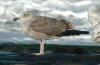 LBBG 2cy L-102780 October 21 2004, Westkapelle, the Netherlands.
 LBBG 2cy L-106398 October 19 2004, Westkapelle, the Netherlands.
Netherlands LBBG: graellsii
'Dutch intergrade'
 Lesser Black-backed Gull graellsii 22 2CY, October 06 2016, Matosinhos Beach, Matosinhos, Portugal. Picture: José Marques.
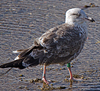 Lesser Black-backed Gull graellsii J3 2CY, June & October 2016, Douro River Estuary, Porto, Portugal. Picture: José Marques.
 Lesser Black-backed Gull graellsii UT 2CY, October 06 2016, Matosinhos beach, Matosinhos, Portugal. Picture: José Marques.
 LBBG KD March 2008 - March 2009, Madrid, Spain. Picture: González & Martin.
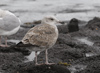 2cy LBBG EJ October 01 2009, Westkapelle, the Netherlands.
 2cy LBBG E532E October 05 2002, Dannes - Le Portel, NW France.
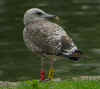 LBBG 2cy C95E October 01 2004, Amsterdam, the Netherlands. Deformed bill.LBBG 2cy 5.361.744 October 22 2001, Westkapelle, the Netherlands.
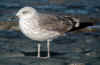 LBBG 2cy 5.364.530 October 21 2004, Westkapelle, the Netherlands.
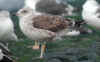 LBBG 2cy 5.412.032 October 01 2004, Westkapelle, the Netherlands.
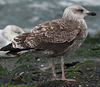 Lesser Black-backed Gull NLA 5.461.334 2CY October 14 2010, Westkapelle, the Netherlands.
N Germany LBBG: transition graellsii - intermedius
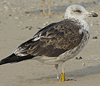 Lesser Black-backed Gull graellsii HAR23 2CY, October 18 2017, IJmuiden, the Netherlands.
 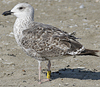 Lesser Black-backed Gull graellsii HEAE3 2CY, August & October 2016, IJmuiden & Katwijk, the Netherlands.
 Lesser Black-backed Gull graellsii HECA2 2CY, October 10 2016, Katwijk, the Netherlands.
 Lesser Black-backed Gull graellsii HXP09 2CY, October 27 2015, Matosinhos Beach, Matosinhos, Portugal. Picture: José Marques.
 LBBG 2cy H082 October 01 2009, Westkapelle, the Netherlands. Also as 2cy.
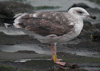 LBBG 2cy H11K October 17 2007, Westkapelle, the Netherlands.
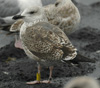 LBBG 2cy H64C October 26 2007, Westkapelle, the Netherlands.
 LBBG 2cy H709 October 12 2010, Madrid, Spain. Photo by Delfín González. Also seen as 2cy April.
 LBBG 2cy H339 October 07 2010, Westkapelle, the Netherlands.
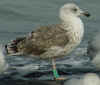 LBBG 2cy AH53 October 13 2001, Westkapelle, the Netherlands.
 .
Denmark LBBG: intermedius
.
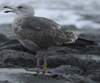 LBBG 2cy V3SS October 27 2010, Westkapelle, the Netherlands.
 Lesser Black-backed Gull intermedius V.EL0 2CY, October 06 2016, Matosinhos beach, Matosinhos, Portugal. Picture: José Marques.
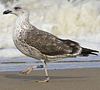 Lesser Black-backed Gull intermedius VHC5 2CY, October 10 2016, Katwijk, the Netherlands.
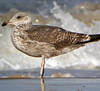 LBBG intermedius 2cy VV9A October 20 2014, Castricum, the Netherlands. Picture: Ruud Altenburg.
 Lesser Black-backed Gull intermedius V.Z9F 2CY, October 11 2016, Leça Beach, Matosinhos, Portugal. Picture: José Marques.
.
Norway LBBG: intermedius
.
 Lesser Black-backed Gull intermedius J658N 2CY, October 06 2016, Matosinhos Beach, Matosinhos, Portugal. Picture: José Marques.
 Lesser Black-backed Gull intermedius J716N 2CY, October 07 2016, Matosinhos beach, Matosinhos, Portugal. Picture: José Marques.
 Lesser Black-backed Gull intermedius JAA08 2CY, October 06 2016, Matosinhos Beach, Matosinhos, Portugal. Picture: José Marques.
 LBBG 2cy J0CN Octoberr 21 2012, Madrid, Spain. Photo by Delfín González.
 LBBG 2cy J8T4 October 06 2009, Westkapelle, the Netherlands.
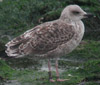 LBBG 2cy J941 October 02 2007 Westkapelle, the Netherlands.
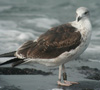 LBBG 2cy JH13 October 26 2007, Westkapelle, the Netherlands.
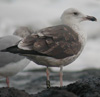 LBBG 2cy JR88 October 18 2007, Westkapelle, the Netherlands.
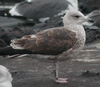 LBBG 2cy J3KC October 19 2002, Westkapelle, the Netherlands.
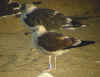 LBBG 2cy JU30 October 19 2002, Westkapelle, the Netherlands.
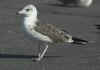 LBBG 2cy 4236519 October 16 2004, Porto, Portugal.
 LBBG 2cy October 05 2002, Dannes - Le Portel, NW France. Third generation rectrices in autumn.
ARRESTED MOULT IN 2CY
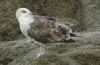 LBBG 2cy October 05 2002, Boulogne-sur-Mer, NW France. The outer primaries are still juvenile: moult will be suspended at P8.
UNRINGED 2CY BIRDS
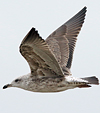 Lesser Black-backed Gull 2CY, October 16 2015, Katwijk, the Netherlands.
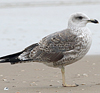 Lesser Black-backed Gull 2CY, October 16 2015, Katwijk, the Netherlands.LBBG 2cy October 01 2001, Le Portel, France.
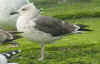 LBBG 2cy October 14 2001, Westkapelle, the Netherlands.