 Lesser Black-backed Gull (graellsii & intermedius)
(last update:
lbbg 1cy May
lbbg 1cy June
lbbg 1cy July
lbbg 1cy August
lbbg 1cy September
lbbg 1cy October
lbbg 1cy November
lbbg 1cy December
lbbg 2cy January
lbbg 2cy February
lbbg 2cy Mar-April
lbbg 2cy May
lbbg 2cy June
lbbg 2cy July
lbbg 2cy August
lbbg 2cy September
lbbg 2cy October
lbbg 2cy Nov - Dec
lbbg 3cy Jan-April
lbbg 3cy May
lbbg 3cy June
lbbg 3cy July
lbbg 3cy August
lbbg 3cy September
lbbg 3cy October
lbbg 3cy Nov - Dec
lbbg sub-ad Jan-April
lbbg sub-ad May
lbbg sub-ad June
lbbg sub-ad July
lbbg sub-ad Aug
lbbg sub-ad Sept
lbbg sub-ad Oct
lbbg sub-ad Nov
lbbg sub-ad Dec
lbbg adult January
lbbg adult February
lbbg adult March
lbbg adult April
lbbg adult May
lbbg adult June
lbbg adult July
lbbg adult August
lbbg adult September
lbbg adult October
lbbg adult Nov - Dec
first calendar year: August
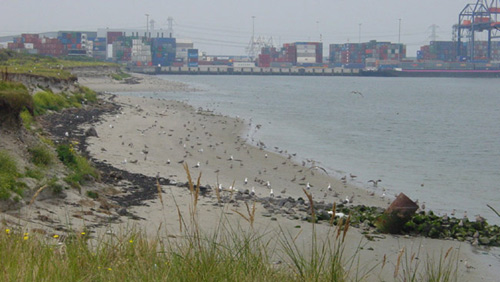
In August most Dutch LBBG leave the colony at the Maasvlakte, Rotterdam (for locations, see the distribution page). By the end of August, 99% of the adults and their juveniles (approximately 70.000 birds) have left the colonies of Maasvlakte & Dintelhaven and they start migrating south (at least leave the immediate feeding grounds around the colony). For a while, they gather at the beach near the colonies, in mixed groups of different age-classes (image below).
|
Identification from michahellis
Such groups may consist of up to 3.000 LBBG by mid September. In these groups the races graellsii and intermedius are both present. Naming races in juvenile plumage is very difficult, and often only possible when birds are banded / ringed or fed by ringed parents. From mid-October the number of juveniles steadily decreases to several 100s and most Dutch LBBG juveniles have to be sought after in Portugal or further south.
Although racial separation of juveniles is very difficult, juvenile LBBG is readably different from other white-headed gull juveniles, Yellow-legged Gull (L. michahellis) coming closest. When inner primaries and tail together with moult score and abrasion of scapulars and wing coverts are seen well, juveniles are quite distinctive.
For long it's known that moult score and quality (condition) of body feathers is one of the more reliable features to distinguish michahellis from LBBG; LBBG being the later hatched, northern breeding species of the two. Subsequently, when juvenile LBBG and YLG are seen side-by-side in August and September in the Netherlands, YLG often stands out with more abraded scapulars, tertials and wing coverts, the fringes already worn, centres slightly bleached and often most scapulars and some coverts moulted to second generation feathers.
But as the table below shows, some LBBG do moult quickly or early, at least well before departing to the wintering grounds. Half of the sample of juvenile LBBG replace (at least some) mantle feathers and scapulars, as early as "still in the colony and begging for food". The table below shows the results and some examples are shown in the images right.
When directly compared with michahellis, moulting graellsii show on average fresh (warm/dark tinged) second generation feathers; where michahellis already shows more bleached (i.e. paler) upper-parts, strongly contrasting with the coverts and tertials. Juvenile coverts, scapulars and tertials in michahellis juveniles often show fringes and tips which are already worn.
Summarizing, most LBBG juveniles can readily be identified by:
- the dark inner primaries, broad tail-band, dark shins, general shape,
- dark centred tertials with narrow straight white fringe,
- pretty neat scapulars and tertials well into September, early October, showing no extreme wear,
- dark brown under-wing coverts,
- dark greater covert bar created by the base of the greater coverts, especially the outer greaters,
- dark chocolate brown centres of scapulars and coverts,
- more barring on upper-tail coverts.
Separating sub-species of graellsii, intermedius, the intermediate Dutch intergrade and fuscus is hard to do in juveniles, although some general features (jizz and contrast in dark base and pale fringes) may be indicative. Where fuscus LBBG lay eggs later than average Dutch LBBG, it is highly unlikely to find advanced covert and scapular moult in fuscus juveniles.
Maasvlakte: 1cy LBBG research
research by ORG
Paragraph continuation from May, June & July sections).
Early in the breeding season it was relatively easy to monitor chicks on a regular basis, by measuring them two or three times a week. This allowed accurate estimations of growth rate for the pulli of Category I (hatched before June 10).
For category II & III, which hatched late June, such regular visits to the nests would have much impact on the colony for two reasons. A: early hatched chicks would run away large distances through the colony, making them vulnerable for attacking adults. And B: recently hatched pulli and eggs would be left unattended and nests could be destroyed by predating adults and Herring Gulls.
Taking these factors in account, we measured category II & III chicks less intensively. Immediately after hatching, birds were measured and tie wrapped. Only three weeks later, birds were measured again when the darvic rings were attached. Some category II & III birds were measured occasionally in between these dates.
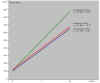
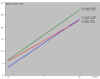 For some individuals, two measurements were not sufficient to allocate birds to a certain category, especially not when hatching was not confirmed. For these individuals we used plots, from earlier research by Arie Spaans at Terschelling. In his paper, he provides several plots, of which two are presented here. Spaans estimated growth graphs for LBBG juveniles in 1992 and 1993. 1992 proved to be a year with food shortage, in 1993 food supply was not a limiting factor in daily growth rate. Growth rate was measured by body mass increment and wing length. We used these graphs to calculate hatching date for Maasvlakte birds in 2004, only when field measurements didn't allow precise hatching date estimations.
Results
 This section will follow soon.
- Some juveniles show fresh feathers in the wing-coverts and scapulars. How can this be explained: late 1st generation or already 2nd generation?
- The presence of such 2nd generation (like) feathers, is it depending on hatching date?
- If post-juvenile moult may start in the colony, what is the range and extent of this moult?
Pictures to use
If you prepare a talk for a local group, or if you are an administrator of a website and, for whatever reason, you prefer to use images of 1CY August Larus fuscus without a ring, maybe you are interested in the pictures below. Please, credit Gull Research Organisation.
 |
 |
 |
 |
 |
 |
 |
 |
 |
 |
 |
 |
 |
 |
 |
 |
 |
 |
 |
 |
 |
 |
 |
 |
 |
 |
 |
 |
 |
 |
 |
 |
 |
 |
 |
 |
 |
 |
 |
 |
 |
 |
 |
 |
 |
 |
 |
 |
 |
 |
 |
 |
 |
 |
 |
 |
 |
 |
 |
 |
 |
 |
U.K.: 'graellsii'
 Lesser Black-backed Gull graellsii 187:F 1CY, August 17 2017, Leixões harbour, Matosinhos, Portugal. Picture: José Marques.
 Lesser Black-backed Gull graellsii 2FH2 1CY, August 28 2015, Leixões Harbour, Matosinhos, Portugal. Picture: José Marques.
 Lesser Black-backed Gull graellsii 3FF3 1CY, August 28 2015, Leixões Harbour, Matosinhos, Portugal. Picture: José Marques.
 Lesser Black-backed Gull graellsii F+Z 1CY, August 17 2017, Leixões harbour, Matosinhos, Portugal. Picture: José Marques.
 Lesser Black-backed Gull graellsii M+X 1CY, August 31 2017, Matosinhos beach, Matosinhos, Portugal. Picture: José Marques.
 Lesser Black-backed Gull graellsii G+N 1CY, August - September 2015, Leixões harbour, Matosinhos, Portugal. Picture: José Marques.
France: 'graellsii'
 Lesser Black-backed Gull 1cy 824N August 22 2008, Calais, NW France. Picture: Jean-Michel Sauvage.
 Lesser Black-backed Gull 1cy 957N August 01 2009, Calais, NW France. Picture: Jean-Michel Sauvage.
 Lesser Black-backed Gull graellsii 3:ENJ 1CY, August 17 2017, Matosinhos beach, Matosinhos, Portugal. Picture: José Marques.
  Lesser Black-backed Gull R:S2R 1CY, August 17 2013, Landfill VRSU de Colmenar Viejo, Madrid, Spain. Picture: Delfín González.
Belgium: 'Dutch intergrade'
 Lesser Black-backed Gull graellsii HTAM 1CY, August 23 2008, De Panne, Belgium. Picture: Peter Adriaens.
 Lesser Black-backed Gull graellsii L.SAU 1CY, August 28 2009, Westkapelle, the Netherlands.
 Lesser Black-backed Gull graellsii L.TAJ 1CY, August 28 2009, Westkapelle, the Netherlands.
  Lesser Black-backed Gull graellsii L.VAM 1CY, August 28 2009, Westkapelle, the Netherlands.
 Lesser Black-backed Gull graellsii N.AAD 1CY, August 26 2010, Westkapelle, the Netherlands (51.33N,
03.25E).
Lesser Black-backed Gull graellsii N.AAD 1CY, August 26 2010, Westkapelle, the Netherlands (51.33N,
03.25E). Lesser Black-backed Gull graellsii N.JAB 1CY, August 24 2010, Westkapelle, the Netherlands (51.33N,
03.25E).
Lesser Black-backed Gull graellsii N.JAB 1CY, August 24 2010, Westkapelle, the Netherlands (51.33N,
03.25E). Lesser Black-backed Gull graellsii N.VAN 1CY, August 30 2010, Westkapelle, the Netherlands (51.33N,
03.25E).
Lesser Black-backed Gull graellsii N.VAN 1CY, August 30 2010, Westkapelle, the Netherlands (51.33N,
03.25E). Lesser Black-backed Gull graellsii NVA.X 1CY, August 26 2010, Westkapelle, the Netherlands (51.33N,
03.25E).
Lesser Black-backed Gull graellsii NVA.X 1CY, August 26 2010, Westkapelle, the Netherlands (51.33N,
03.25E). Lesser Black-backed Gull graellsii NWA.G 1CY, August 26 2010, Westkapelle, the Netherlands (51.33N,
03.25E).
Lesser Black-backed Gull graellsii NWA.G 1CY, August 26 2010, Westkapelle, the Netherlands (51.33N,
03.25E).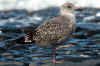 LBBG 1cy L-902232 August
17 2005, Westkapelle, the Netherlands.
LBBG 1cy L-902232 August
17 2005, Westkapelle, the Netherlands. LBBG 1cy L-913090 August 24 2010, Westkapelle, the Netherlands.
 LesserBlack-backed Gull graellsii BLB L-913454 1CY, August 26 2010, Westkapelle, the Netherlands.
 LBBG 1cy L-913461 August 24 2010, Westkapelle, the Netherlands.
 Lesser Black-backed Gull graellsii BLB L-913xxx 1CY, August 26 2010, Westkapelle, the Netherlands.
the Netherlands: graellsii 'Dutch intergrade'
 Lesser Black-backed Gull graellsii Y.ADM 1CY, August 27 2008, IJmuiden, the Netherlands.
 Lesser Black-backed Gull graellsii Y.ADN 1CY, August 27 2008, IJmuiden, the Netherlands.
 Lesser Black-backed Gull graellsii Y.ADP 1CY, August 27 2008, IJmuiden, the Netherlands.
 Lesser Black-backed Gull graellsii Y.ADY 1CY, August 13-20 2008, IJmuiden, the Netherlands; September 08 2008 Amsterdam, the Netherlands; February 28 2009, Ciudad Real, Spain. Picture: Gabriel Martín.
 Lesser Black-backed Gull graellsii Y.AFD 1CY, August 22 2008, IJmuiden, the Netherlands.
 Lesser Black-backed Gull graellsii Y.ALS 1CY, August 10 2009, IJmuiden, the Netherlands.
 Lesser Black-backed Gull graellsii Y.AMC 1CY, August 13 2010, IJmuiden, the Netherlands.
 Lesser Black-backed Gull graellsii Y.ARX 1CY, August 13 2010, IJmuiden, the Netherlands.
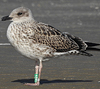 Lesser Black-backed Gull graellsii Y.BWD 1CY, June-August 2015, IJmuiden, the Netherlands. Picture: Maarten van Kleinwee.
 Lesser Black-backed Gull graellsii Y.BWH 1CY, August 15 2015, IJmuiden, the Netherlands.
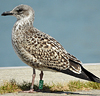 Lesser Black-backed Gull graellsii Y.BWJ 1CY, June-August 2015, IJmuiden, the Netherlands. Picture: Maarten van Kleinwee.
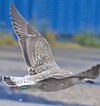 Lesser Black-backed Gull graellsii Y.BWN 1CY hybrid F2, June & August 2015, IJmuiden, the Netherlands.
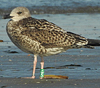 Lesser Black-backed Gull graellsii Y.BWS 1CY, June-August 2015, IJmuiden, the Netherlands. Picture: Maarten van Kleinwee.
 Lesser Black-backed Gull graellsii Y.BXK 1CY, August 18 2015, IJmuiden, the Netherlands.
 Lesser Black-backed Gull graellsii Y.BXN 1CY, August 15 & 18 2015, IJmuiden, the Netherlands.
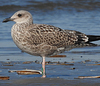 Lesser Black-backed Gull graellsii Y.BZB 1CY, July-August 2015, IJmuiden, the Netherlands. Picture: Maarten van Kleinwee.Lesser Black-backed Gull graellsii Y.BZH 1CY, August 05 2015, IJmuiden, the Netherlands.
 Lesser Black-backed Gull graellsii Y.BZP 1CY, August 05 - 23 2015, IJmuiden, the Netherlands.
 Lesser Black-backed Gull graellsii Y.BZS 1CY, August 23 2015, IJmuiden, the Netherlands.
 Lesser Black-backed Gull graellsii K.SAL 1CY, August 26 2010, Westkapelle, the Netherlands.
 Lesser Black-backed Gull graellsii R.X 1CY, August 21 2013, Katwijk, the Netherlands.
 Lesser Black-backed Gull graellsii U.A 1CY, August 21 2013, Katwijk, the Netherlands.
 Lesser Black-backed Gull graellsii FH 1cy, August 15 2012, Barneveld, the Netherlands.
 Lesser Black-backed Gull graellsii XH 1CY, August 29 2015, Utrecht, the Netherlands.
 Lesser Black-backed Gull graellsii 0F 1cy, August 28 2010, Dordrecht, the Netherlands.
 Lesser Black-backed Gull graellsii 1F 1cy, August 28 2010, Dordrecht, the Netherlands.
 Lesser Black-backed Gull graellsii 7Y 1cy, August 24 2010, Westkapelle, the Netherlands.
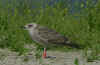 LBBG
1cy B16 E August
22 2002, Missouriweg, Maasvlakte, the
Netherlands.
LBBG
1cy B16 E August
22 2002, Missouriweg, Maasvlakte, the
Netherlands. 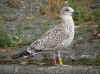 LBBG
1cy C95 E August 31 2003, Amsterdam, the Netherlands.
LBBG
1cy C95 E August 31 2003, Amsterdam, the Netherlands. 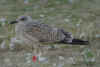 LBBG
1cy E15 E August
14 2003, Nachtegalenkeet, Maasvlakte, the
Netherlands.
LBBG
1cy E15 E August
14 2003, Nachtegalenkeet, Maasvlakte, the
Netherlands. 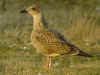 LBBG
1cy E21 E August
14 2003, Nachtegalenkeet, Maasvlakte, the
Netherlands.
LBBG
1cy E21 E August
14 2003, Nachtegalenkeet, Maasvlakte, the
Netherlands. 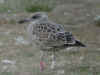 LBBG
1cy E24 E August
14 2003, Nachtegalenkeet, Maasvlakte, the
Netherlands.
LBBG
1cy E24 E August
14 2003, Nachtegalenkeet, Maasvlakte, the
Netherlands. 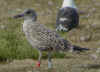 LBBG
1cy E31 E August 14 2003, Nachtegalenkeet, Maasvlakte, the Netherlands.
LBBG
1cy E31 E August 14 2003, Nachtegalenkeet, Maasvlakte, the Netherlands. 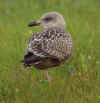 LBBG
1cy E54 E August 06 2004, Dintelhaven, Maasvlakte, the Netherlands.
LBBG
1cy E54 E August 06 2004, Dintelhaven, Maasvlakte, the Netherlands.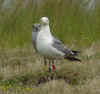 LBBG
x YLG 1cy E56 E August 06 2004, Dintelhaven, Maasvlakte, the Netherlands. Hybrid from
female CU9.
LBBG
x YLG 1cy E56 E August 06 2004, Dintelhaven, Maasvlakte, the Netherlands. Hybrid from
female CU9.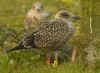 LBBG
1cy E65 E August 06 2004, Dintelhaven, Maasvlakte, the Netherlands.
LBBG
1cy E65 E August 06 2004, Dintelhaven, Maasvlakte, the Netherlands.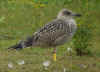 LBBG
1cy E66 E August 06 2004, Dintelhaven, Maasvlakte, the Netherlands.
LBBG
1cy E66 E August 06 2004, Dintelhaven, Maasvlakte, the Netherlands.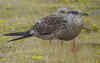 LBBG
1cy E76 E August 06 2004, Maasvlakte, the Netherlands.
LBBG
1cy E76 E August 06 2004, Maasvlakte, the Netherlands.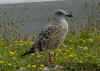 LBBG
1cy E87 E August 06 2004, Maasvlakte, the Netherlands.
LBBG
1cy E87 E August 06 2004, Maasvlakte, the Netherlands.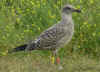 LBBG
1cy E90 E August 06 2004, Maasvlakte, the Netherlands.
LBBG
1cy E90 E August 06 2004, Maasvlakte, the Netherlands.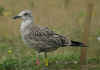 LBBG
1cy E169 E August
06 2004, Nachtegalenkeet, Maasvlakte, the Netherlands.
LBBG
1cy E169 E August
06 2004, Nachtegalenkeet, Maasvlakte, the Netherlands.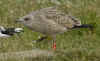 LBBG
1cy E173 E August 06 2004, Maasvlakte, the Netherlands.
LBBG
1cy E173 E August 06 2004, Maasvlakte, the Netherlands.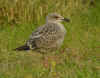 LBBG
1cy E800 E August 06 2004, Dintelhaven, Maasvlakte, the Netherlands.
LBBG
1cy E800 E August 06 2004, Dintelhaven, Maasvlakte, the Netherlands. Lesser Black-backed Gull graellsii NLA 5.512.205 1CY, August 27 2017, Utrecht, the Netherlands.
 LBBG 1cy 5.426.690 August 25 2011, IJmuiden, the Netherlands.
 LBBG NLA xxx 1CY, August 25 2011, IJmuiden, the Netherlands.
 Lesser Black-backed Gull graellsii NLA 5.422.481 1CY, August 20 2008, IJmuiden, the Netherlands.
 LBBG 1cy5.417.022 August 25 2011, IJmuiden, the Netherlands.
  LBBG 1cy 5.414.383August 21 2004, Amsterdam, the Netherlands. Picture Ruud Altenburg.
 LBBG 1cy 5.412.342August 22 2004, Amsterdam, the Netherlands. Picture Ruud Altenburg.
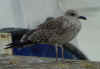 LBBG
1cy 5.364.435 August
28 2003, IJmuiden, the
Netherlands.
LBBG
1cy 5.364.435 August
28 2003, IJmuiden, the
Netherlands. LBBG 1cy 5.292.029August 13 2005, Amsterdam, the Netherlands. Picture Ruud Altenburg.
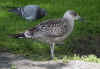 1cy LBBG 5.179.990 June 12 2005, Amsterdam, the Netherlands. Pullus born near Amsterdam.
 LBBG 1CY HV245 August 31 2013, Boulogne-sur-Mer, NW France. Picture: Jean-Michel Sauvage.
Denmark: intermedius
 Lesser Black-backed Gull intermedius V.TV2 1CY, August 31 2017, Barneveld, the Netherlands.
Norway: intermedius
 LBBG intermedius J0K0 1CY-6CY, August 2008 - May 2013, Norway - Denmark - Spain - Morocco - the Netherlands.
 Nice example bird showing arrested moult in 3CY after an extraordinary extensive moult at the wintering grounds in Morocco. Supported by images.
 LBBG intermedius 1cy JXR3 August 28 2009, Westkapelle, the Netherlands.
 Also seen as 2cy.
 LBBG intermedius 1cy JZP9 August 28 2009, Westkapelle, the Netherlands.
 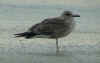 LBBG
1cy NOS August
28 2003, IJmuiden, the
Netherlands. Ringed in Norway.
LBBG
1cy NOS August
28 2003, IJmuiden, the
Netherlands. Ringed in Norway.unringed LBBG
 Lesser Black-backed Gull graellsii 1CY, August 14 2016, Westenschouwen, the Netherlands.
 Lesser Black-backed Gull graellsii 1CY, August 29 2015, Utrecht, the Netherlands.
 Lesser Black-backed Gull 1CY, August 27 2017, Utrecht, the Netherlands.
 Lesser Black-backed Gull 1CY, August 27 2017, Utrecht, the Netherlands.
 Lesser Black-backed Gull 1CY, August 27 2017, Utrecht, the Netherlands.
 Lesser Black-backed Gull 1CY, August 27 2017, Utrecht, the Netherlands.
 Lesser Black-backed Gull 1CY, August 27 2017, Utrecht, the Netherlands.
 Lesser Black-backed Gull 1CY, August 27 2017, Utrecht, the Netherlands.
 Lesser Black-backed Gull 1CY, August 27 2017, Utrecht, the Netherlands.
 Lesser Black-backed Gull 1CY, August 27 2017, Utrecht, the Netherlands.
 Lesser Black-backed Gull 1CY, August 27 2017, Utrecht, the Netherlands.
 Lesser Black-backed Gull 1CY, August 21 2017, Katwijk, the Netherlands.
 Lesser Black-backed Gull 1CY, August 21 2017, Katwijk, the Netherlands.
 Lesser Black-backed Gull 1CY, August 21 2017, Katwijk, the Netherlands.
 Lesser Black-backed Gull 1CY, August 21 2017, Katwijk, the Netherlands.
 Lesser Black-backed Gull 1CY, August 21 2017, Katwijk, the Netherlands.
 Lesser Black-backed Gull 1CY, August 21 2017, Katwijk, the Netherlands.
 Lesser Black-backed Gull 1CY, August 21 2017, Katwijk, the Netherlands.
 Lesser Black-backed Gull 1CY, August 21 2017, Katwijk, the Netherlands.
 Lesser Black-backed Gull 1CY, August 21 2017, Katwijk, the Netherlands.
 Lesser Black-backed Gull 1CY, August 21 2017, Katwijk, the Netherlands.
 Lesser Black-backed Gull 1CY, August 21 2017, Katwijk, the Netherlands.
 Lesser Black-backed Gull 1CY, August 21 2017, Katwijk, the Netherlands.
 Lesser Black-backed Gull 1CY, August 21 2017, Katwijk, the Netherlands.
 Lesser Black-backed Gull 1CY, August 21 2017, Katwijk, the Netherlands.
 Lesser Black-backed Gull 1CY, August 21 2017, Katwijk, the Netherlands.
 Lesser Black-backed Gull 1CY, August 21 2017, Katwijk, the Netherlands.
 Lesser Black-backed Gull 1CY, August 21 2017, Katwijk, the Netherlands.
 Lesser Black-backed Gull 1CY, August 21 2017, Katwijk, the Netherlands.
 Lesser Black-backed Gull 1CY, August 21 2017, Katwijk, the Netherlands.
 Lesser Black-backed Gull 1CY, August 21 2017, Katwijk, the Netherlands.
 Lesser Black-backed Gull 1CY, August 21 2017, Katwijk, the Netherlands.
 Lesser Black-backed Gull 1CY, August 21 2017, Katwijk, the Netherlands.
 Lesser Black-backed Gull 1CY, August 21 2017, Katwijk, the Netherlands.
 Lesser Black-backed Gull graellsii 1CY, August 20 2016, IJmuiden, the Netherlands.
 Lesser Black-backed Gull graellsii 1CY, August 20 2016, IJmuiden, the Netherlands.
 Lesser Black-backed Gull graellsii 1CY, August 20 2016, IJmuiden, the Netherlands.
 Lesser Black-backed Gull graellsii 1CY, August 20 2016, IJmuiden, the Netherlands.
 Lesser Black-backed Gull graellsii 1CY, August 20 2016, IJmuiden, the Netherlands.
 Lesser Black-backed Gull graellsii 1CY, August 20 2016, IJmuiden, the Netherlands.
 Lesser Black-backed Gull graellsii 1CY, August 20 2016, IJmuiden, the Netherlands.
 Lesser Black-backed Gull graellsii 1CY, August 20 2016, IJmuiden, the Netherlands.
 Lesser Black-backed Gull graellsii 1CY, August 20 2016, IJmuiden, the Netherlands.
 Lesser Black-backed Gull graellsii 1CY, August 20 2016, IJmuiden, the Netherlands.
 Lesser Black-backed Gull graellsii 1CY, August 20 2016, IJmuiden, the Netherlands.
 Lesser Black-backed Gull graellsii 1CY, August 20 2016, IJmuiden, the Netherlands.
 Lesser Black-backed Gull graellsii 1CY, August 20 2016, IJmuiden, the Netherlands.
 Lesser Black-backed Gull graellsii 1CY, August 23 2016, Katwijk, the Netherlands.
 Lesser Black-backed Gull graellsii 1CY, August 23 2016, Katwijk, the Netherlands.
 Lesser Black-backed Gull graellsii 1CY, August 23 2016, Katwijk, the Netherlands.
 Lesser Black-backed Gull graellsii 1CY, August 23 2016, Katwijk, the Netherlands.
 Lesser Black-backed Gull graellsii 1CY, August 20 2016, IJmuiden, the Netherlands.
 Lesser Black-backed Gull graellsii 1CY, August 02 2015, Katwijk, the Netherlands.
 Lesser Black-backed Gull graellsii 1CY, August 02 2015, Katwijk, the Netherlands.
 Lesser Black-backed Gull graellsii 1CY, August 02 2015, Katwijk, the Netherlands.
 Lesser Black-backed Gull graellsii 1CY, August 02 2015, Katwijk, the Netherlands.
 LBBG 1cy, August 22 2002, Dintelhaven Maasvlakte, the Netherlands.