 Lesser Black-backed Gull (graellsii & intermedius)
(last update: June 24, 2012
lbbg 1cy May
lbbg 1cy June
lbbg 1cy July
lbbg 1cy August
lbbg 1cy September
lbbg 1cy October
lbbg 1cy November
lbbg 1cy December
lbbg 2cy January
lbbg 2cy February
lbbg 2cy Mar-April
lbbg 2cy May
lbbg 2cy June
lbbg 2cy July
lbbg 2cy August
lbbg 2cy September
lbbg 2cy October
lbbg 2cy Nov - Dec
lbbg 3cy Jan-April
lbbg 3cy May
lbbg 3cy June
lbbg 3cy July
lbbg 3cy August
lbbg 3cy September
lbbg 3cy October
lbbg 3cy Nov - Dec
lbbg sub-ad Jan-April
lbbg sub-ad May
lbbg sub-ad June
lbbg sub-ad July
lbbg sub-ad Aug
lbbg sub-ad Sept
lbbg sub-ad Oct
lbbg sub-ad Nov
lbbg sub-ad Dec
lbbg adult January
lbbg adult February
lbbg adult March
lbbg adult April
lbbg adult May
lbbg adult June
lbbg adult July
lbbg adult August
lbbg adult September
lbbg adult October
lbbg adult Nov - Dec
sub-adult: June
 |
 |
 |
 |
 |
 |
 |
 |
 |
 |
 |
 |
 |
 |
 |
 |
 |
 |
 |
 |
 |
 |
 |
 |
 |
 |
Sub-adults in their 3rd and 4th summer (fourth calendar year and fifth calendar year respectively) show serious overlap in characteristics. Best clues for ageing these birds is the combination of bare part coloration and age of the primaries and secondaries. Nevertheless, although white tips on the primaries and a mirror on p10 may be expected in 4cy birds, this is not always the case. The same applies for bare parts, which may look very immature in one bird, very adult-like in another while you got the feeling these two have to be born in the same year. In general, sub-adults show:
- very small white tips on the old outer primaries (but beware wear),
- a very limited white mirror on the old p10 and absence of a mirror on p9,
- isolated black markings on old, worn rectrices,
- brown centred coverts, often found in the carpal edge (outer lesser coverts),
- vermiculation on (central) tertials or an accentuated black centre in the tertials, which may have the white tips confined to the inner web,
- immature colouration of bare parts,
- secondaries show brownish centres with a zigzag pattern along the trailing edge.
Arrested and suspended moult
In other sections, much as been said about suspended or arrested moult and by June such birds can be found at the IJmuiden beach and in the Maasvlakte colony (both the Netherlands). For problems related to correct ageing and allocation to specific sub-species, the discussion page can be found here.
- one seen at IJmuiden,
- another seen at IJmuiden,
- another seen at IJmuiden in July,
- birds from the Maasvlakte (the Netherlands) in May 2001,
- a sub-adult in June at the Maasvlakte colony,
- birds at Le Portel (France) on the beach in May,
- possible fuscus at Dannes (France).
Larus argentatus argenteus & Larus fuscus graellsii - Moerdijk, the Netherlands
= see pictures of trapped sub-adults HERE =
Age of sample birds, origin & sex
Breeding birds are not necessarily fully mature adults, as both Herring and Lesser Black-backed Gull may breed as sub-adults. Chabrzyk & Coulson (1976) found that 14% of Herring Gulls start breeding as 4cy birds (also see Drost et al., 1961). In the Herring Gull we used black on the primary coverts as a feature to separate between fully mature birds and sub-adults (see thumbnails). In the results, we will distinguish between sub-adult and adult birds (showing clean grey primary coverts, see thumbnails) when results need separation for age.
Fully mature Lesser-black-backed Gulls may still show obvious black markings on the primary coverts (personal observations based on ringed birds). We have illustrated all greater primary wing coverts of known-age birds HERE. We classified sub-adults as obviously immature birds, considered 4cy and 5cy, with extensive brown-black on the primary coverts. By doing so, we may have excluded delayed 6cy or older birds and included advanced 4cy or 5cy birds. However, in the absence of any other safe criterion, primary covert markings were considered the most appropriate way to distinguish full adult from sub-adult birds (see plate 3). Sixty-two Lesser Black-backed Gulls were scored ‘sub-adult’: 43 males and 18 females. The sex-ratio for the total sample is reverse: 443 males and 515 females.
Based on ring recoveries, the first breeding birds at Moerdijk (early 1980s) probably originated from the vast colonies at Maasvlakte and Dintelhaven (51.57N 04.01E). In recent years we have also found birds which were born in the recently established colony of Zeebrugge, Belgium (51.21N 03.11E). Ring readings show that nowadays the Moerdijk colony mainly hosts locally-reared birds.
In 2005-2006 we ringed and measured 315 breeding Herring Gulls (165 males and 137 females, 13 birds not sexed) and 1038 Lesser Black-backed Gulls (460 males and 535 females, 43 birds not sexed). Wingspan in the Herring Gull population ranges from 385 – 465 (average 427) and ranges from 385 – 462 (average 426) in Lesser Black-backed Gulls (table 1). We trapped 113 birds of known age (35 Herring Gulls and 77 Lesser Black-backed Gulls). Known age varied from 4cy to 19cy. The oldest known bird in our sample is Dutch HG mS0, born in 1987 (i.e. 19 CY) and caught in the Moerdijk colony in 2005.
| range | average | SD | |
| HG ♂ | 413 - 465 | 437 | 9.3 |
| HG ♀ | 385 - 430 | 415 | 7.8 |
| LBBG ♂ | 410 - 462 | 438 | 8.9 |
| LBBG ♀ | 385 - 435 | 415 | 8.2 |
Table 1: Wingspan (in mm) in Herring Gull and Lesser Black-backed Gull.
sub-adult Lesser Black-backed Gulls - U.K.
.
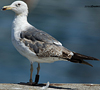 Lesser Black-backed Gull graellsii 1CS9 3CY-4CY, June 2016 & June 2017, Matosinhos, Coimbra, Portugal. Picture: José Marques.
 sub-adult Lesser Black-backed Gulls - France.
.
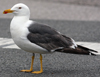 Lesser Black-backed Gull 4cy FRP EA677701 / 072A June 03 2012, Boulogne sur mer, NW France. Picture: Jean-Michel Sauvage.
 Lesser Black-backed Gull 5cy 377N June 23 2010, Calais, NW France. Picture: Jean-Michel Sauvage.
 Lesser Black-backed Gull 4cy-6cy 600N 2010-2012, Calais, NW France. Picture: Jean-Michel Sauvage.
sub-adult Lesser Black-backed Gulls - Belgium.
.
 Lesser Black-backed Gull 4cy STAY June 09 2014, Calais, NW France. Picture: Jean-Michel Sauvage.
 Lesser Black-backed Gull graellsii NHA.G 4CY, June 28 2013, Zeebrugge, Belgium. Picture: Peter Adriaens.
  Lesser Black-backed Gull 4cy NTAZ April & June 2013, Calais, NW France. Picture: Jean-Michel Sauvage.
sub-adult Lesser Black-backed Gulls - the Netherlands.
.
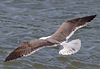 Lesser Black-backed Gull graellsii H.1 4CY, June 05 2015, Utrecht, the Netherlands. Picture: Herman Bouman.
 Lesser Black-backed Gull graellsii JE 4CY, June 08 2015, Maasvlakte-Dintelhaven, the Netherlands. Picture: Merijn Loeve.
 Lesser Black-backed Gull graellsii KK 4CY, June 08 2015, Rotterdam, the Netherlands. Picture: Merijn Loeve.
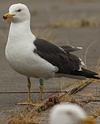 Lesser Black-backed Gull graellsii R6 6CY, June 09 2015, Rotterdam, the Netherlands. Picture: Merijn Loeve.
 Lesser Black-backed Gull graellsii S.W 4CY, June 29 - July 05 2017, Utrecht, the Netherlands.
 Lesser Black-backed Gull graellsii N.8 4CY, May 30 - June
12 2016, Utrecht, the Netherlands.
Lesser Black-backed Gull graellsii N.8 4CY, May 30 - June
12 2016, Utrecht, the Netherlands. 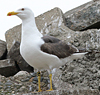 Lesser Black-backed Gull 1CY & 4CY R.Z July 2013 & June 2016, Katwijk, the Netherlands.
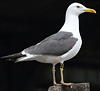 Lesser Black-backed Gull graellsii T.F 1CY & 4CY, September 2013 & June 2016, Katwijk, the Netherlands.
 Lesser Black-backed Gull graellsii Y8 4CY, June
06 2016, Maasvlakte, the Netherlands.
Lesser Black-backed Gull graellsii Y8 4CY, June
06 2016, Maasvlakte, the Netherlands.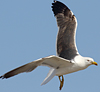 Lesser Black-backed Gull graellsii xx 4CY, June
06 2016, Maasvlakte, the Netherlands.
Lesser Black-backed Gull graellsii xx 4CY, June
06 2016, Maasvlakte, the Netherlands.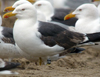 4CY LBBG XF June 16 2013, Noordwijk, the
Netherlands. Picture: Frank van der Meer.
4CY LBBG XF June 16 2013, Noordwijk, the
Netherlands. Picture: Frank van der Meer. 4cy LBBG TE8 June 16 2001, Missouriweg
Maasvlakte, the
Netherlands. Ringed July 08 1998 as pullus.
4cy LBBG TE8 June 16 2001, Missouriweg
Maasvlakte, the
Netherlands. Ringed July 08 1998 as pullus. 5cy LBBG EAG4 June 17 2001, Missouriweg
- Maasvlakte, the
Netherlands. Ringed as pullus, July 04 1997.
5cy LBBG EAG4 June 17 2001, Missouriweg
- Maasvlakte, the
Netherlands. Ringed as pullus, July 04 1997.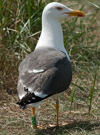 5cy LBBG KLAS June
24 2011, Texel, the Netherlands. Ringed as breeding male.
5cy LBBG KLAS June
24 2011, Texel, the Netherlands. Ringed as breeding male. 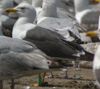 4CY LBBG KRAF June 16 2013, Noordwijk, the
Netherlands. Picture: Ruud Altenburg.
4CY LBBG KRAF June 16 2013, Noordwijk, the
Netherlands. Picture: Ruud Altenburg.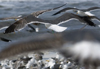 4CY LBBG KXAX June 24 2013, Noordwijk, the
Netherlands.
4CY LBBG KXAX June 24 2013, Noordwijk, the
Netherlands. 4CY LBBG YAMS June 22 2013, Noordwijk, the
Netherlands. Picture: Maarten van Kleinwee.
4CY LBBG YAMS June 22 2013, Noordwijk, the
Netherlands. Picture: Maarten van Kleinwee.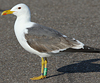 Lesser Black-backed Gull graellsii Y.BMV 4CY, June
06 2016, Katwijk, the Netherlands.
Lesser Black-backed Gull graellsii Y.BMV 4CY, June
06 2016, Katwijk, the Netherlands.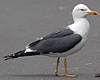 Lesser Black-backed Gull graellsii NLA 5.467.917 5CY, June 09 2015, Rotterdam, the Netherlands. Picture: Merijn Loeve.
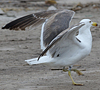 Lesser Black-backed Gull graellsii NLA 5.501.386 4CY, June
13 2016, Katwijk, the Netherlands.
Lesser Black-backed Gull graellsii NLA 5.501.386 4CY, June
13 2016, Katwijk, the Netherlands. Lesser Black-backed Gull graellsii NLA 5.502.143 4CY, June
18 & July 05 2016, Katwijk, the Netherlands.
Lesser Black-backed Gull graellsii NLA 5.502.143 4CY, June
18 & July 05 2016, Katwijk, the Netherlands.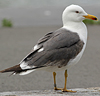 Lesser Black-backed Gull graellsii NLA 5.502.195 4CY, June 08 2015, Rotterdam, the Netherlands. Picture: Merijn Loeve.
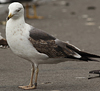 Lesser Black-backed Gull graellsii NLA 5.502.379 4CY, June 09 2015, Rotterdam, the Netherlands. Picture: Merijn Loeve.
 Lesser Black-backed Gull graellsii NLA 5.505.785 4CY, June 29 2017, Utrecht, the Netherlands.
 Lesser Black-backed Gull graellsii NLA xx37645 4CY, June 24 2013, Noordwijk, the
Netherlands.
Lesser Black-backed Gull graellsii NLA xx37645 4CY, June 24 2013, Noordwijk, the
Netherlands.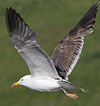 Lesser Black-backed Gull graellsii NLA 5.x03.743 4CY, June
06 2016, Katwijk, the Netherlands.
Lesser Black-backed Gull graellsii NLA 5.x03.743 4CY, June
06 2016, Katwijk, the Netherlands.sub-adult Lesser Black-backed Gulls - ringed in winter in Portugal.
.
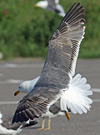 Lesser Black-backed Gull graellsii F380 4CY, June
06 2016, Katwijk, the Netherlands.
Lesser Black-backed Gull graellsii F380 4CY, June
06 2016, Katwijk, the Netherlands.sub-adult Lesser Black-backed Gulls - unringed.
.
 LBBG sub-adult / 4CY June 24 2013, Noordwijk, the
Netherlands.
LBBG sub-adult / 4CY June 24 2013, Noordwijk, the
Netherlands. LBBG sub-adult / 4CY June 24 2013, Noordwijk, the
Netherlands.
LBBG sub-adult / 4CY June 24 2013, Noordwijk, the
Netherlands.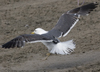 LBBG sub-adult / 4CY June 24 2013, Noordwijk, the
Netherlands.
LBBG sub-adult / 4CY June 24 2013, Noordwijk, the
Netherlands.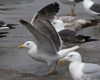 LBBG sub-adult / 4CY June 24 2013, Noordwijk, the
Netherlands.
LBBG sub-adult / 4CY June 24 2013, Noordwijk, the
Netherlands. LBBG sub-adult / 5CY June 24 2013, Noordwijk, the
Netherlands.
LBBG sub-adult / 5CY June 24 2013, Noordwijk, the
Netherlands.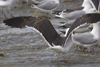 LBBG sub-adult / 4CY June 24 2013, Noordwijk, the
Netherlands.
LBBG sub-adult / 4CY June 24 2013, Noordwijk, the
Netherlands. LBBG sub-adult June 24 2013, Noordwijk, the
Netherlands.
LBBG sub-adult June 24 2013, Noordwijk, the
Netherlands.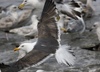 LBBG sub-adult / 4CY June 24 2013, Noordwijk, the
Netherlands.
LBBG sub-adult / 4CY June 24 2013, Noordwijk, the
Netherlands.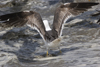 LBBG sub-adult / 4CY June 24 2013, Noordwijk, the
Netherlands.
LBBG sub-adult / 4CY June 24 2013, Noordwijk, the
Netherlands. LBBG sub-adult June 24 2013, Noordwijk, the
Netherlands.
LBBG sub-adult June 24 2013, Noordwijk, the
Netherlands. LBBG sub-adult June 24 2013, Noordwijk, the
Netherlands.
LBBG sub-adult June 24 2013, Noordwijk, the
Netherlands. LBBG sub-adult June 24 2013, Noordwijk, the
Netherlands.
LBBG sub-adult June 24 2013, Noordwijk, the
Netherlands. LBBG sub-adult / 4CY June 24 2013, Noordwijk, the
Netherlands.
LBBG sub-adult / 4CY June 24 2013, Noordwijk, the
Netherlands. LBBG sub-adult June 24 2013, Noordwijk, the
Netherlands.
LBBG sub-adult June 24 2013, Noordwijk, the
Netherlands. LBBG
sub-adult, June 17 2001, Missouriweg Maasvlakte, the
Netherlands. A clear division between p7 and p8. Arrested
autumn moult is rare in LBBGs from Western Europe.
LBBG
sub-adult, June 17 2001, Missouriweg Maasvlakte, the
Netherlands. A clear division between p7 and p8. Arrested
autumn moult is rare in LBBGs from Western Europe.